

I appreciate Disgaea 5: Alliance of Vengeance. The game hands you a gigantic toolset of systems and asks what you want to do with them. But for some reason, that freedom doesn’t sit right with my spirit (not yet, at least).
People love freedom in video games.
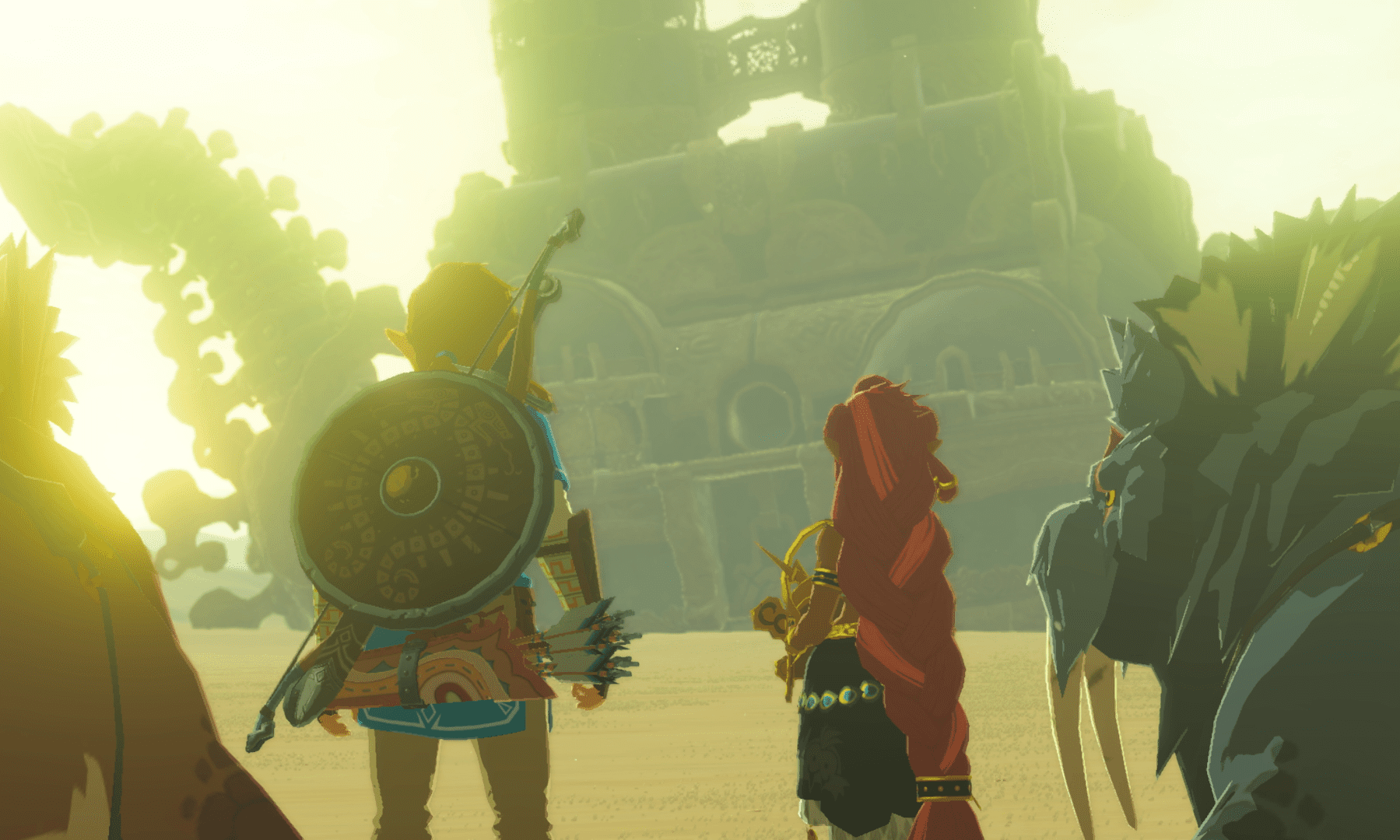
One of the more recent, most popular examples of a sandbox-esque open world game, The Legend of Zelda: Breath of the Wild (if three years ago is recent to anyone’s standards), is a great example of a freedom filled game that people love.
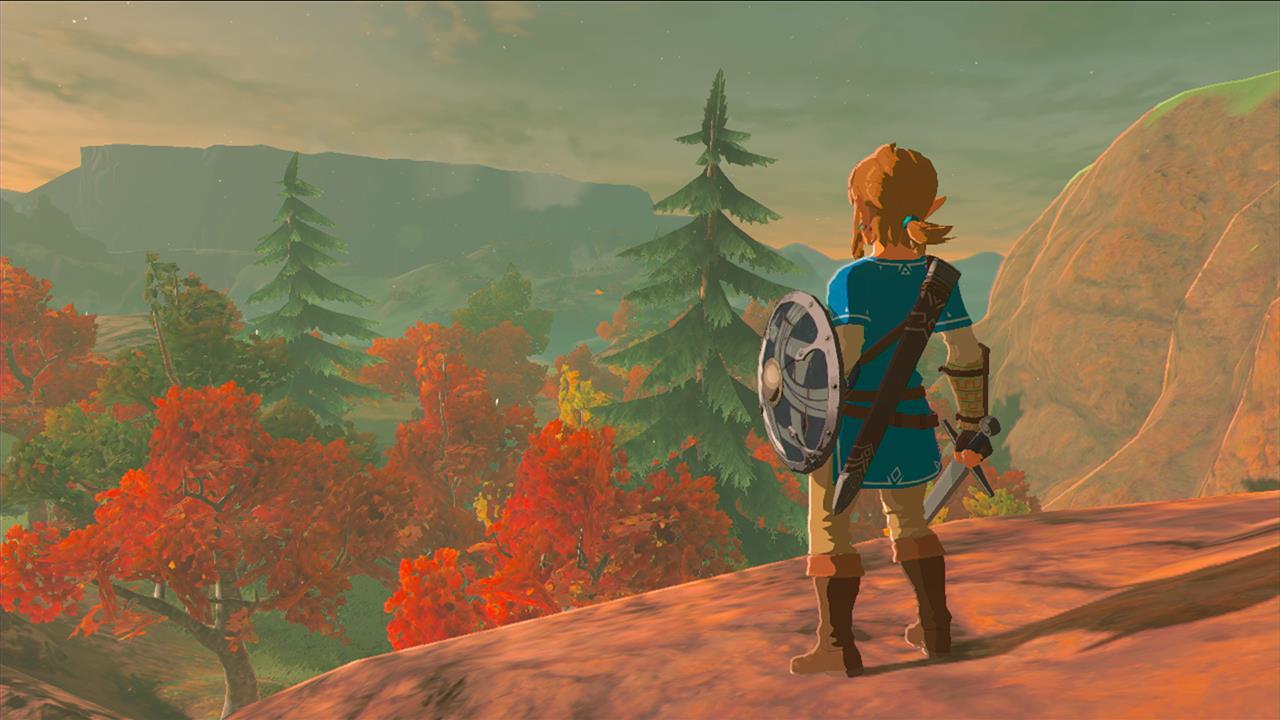
It’s a game that’s characterized by long periods of quiet exploration. Getting to the tallest structure you can find and just seeing what’s out there. Someone that’s watching you play might think you’re aimlessly walking around and climbing like a drone for no reason. That the game is just about doing nothing really in particular.
But those moments were often the most enjoyable for a lot of people. That sense of discovery never really got old. More importantly though, we always had a clear idea in our minds about what we were doing.
Because we weren’t just doing ‘nothing in particular’. We had a vision, a goal! And those goals were ones that we made for ourselves. Of course, Breath of the Wild tells players in no uncertain terms that we have to ‘destroy Ganon’. But it never tells us exactly what we need to do every step of the way. It never gives us some laundry list of things to complete (you don’t even have to free the divine beasts if you don’t want to!)
That’s what freedom is. But from what I’ve learned playing Disgaea 5, it is that freedom doesn’t come easy. We’ll get to that in a minute.
Breath of the Wild gave us freedom, but that freedom came relatively easily. Think about it. All you really have to do to get started in that game, after the tutorial, is find a shrine and pop that boy open.
Once you complete that shrines puzzle, you get a nice little reward: a Spirit Orb. When you collect four of them, you can cash them in to gain more health or more stamina. With more health, you can contend with tougher enemies. With more stamina, you can climb for longer and crest taller cliffsides. It’s a simple conveyance of the progression system.
With that, we already have a miniature goal in mind. Just find more shrines. So, we go off into the world. We climb the tallest snow-capped mountains. Trudge through knee deep swamps. Brave the sweltering heat of the deserts.
It doesn’t really matter where we go, because there will always be shrines. So, we set our own goals for ourselves.
Some people will no doubt see Death Mountain off in the distance at the start of the game and say something like, “Holy shit! A volcano! I’m gonna go over there!”. Others will see the giant cherry blossom tree (at least a tree that looks like a cherry blossom), miles away and head on over here.
Each location, and the path to them, provide players with their own seemingly unique adventure. And they’re also full of shrines.
Since players are constantly growing stronger for that final battle against Ganon, there’s never really a question of whether they’re playing the game ‘correctly’ or of what they’re supposed to be doing. It’s always clear: find a ton of shrines.
We’re free from the burden of thought. We can just enjoy the experience for what it is, they way the designers intended: our own way.
On the surface, Disgaea 5 has just as much freedom as any open world sandbox like Breath of the Wild. I know that’s an insane thing to say. But I’m not really comparing the two games. I’m just saying they both have the same incredibly large scope.
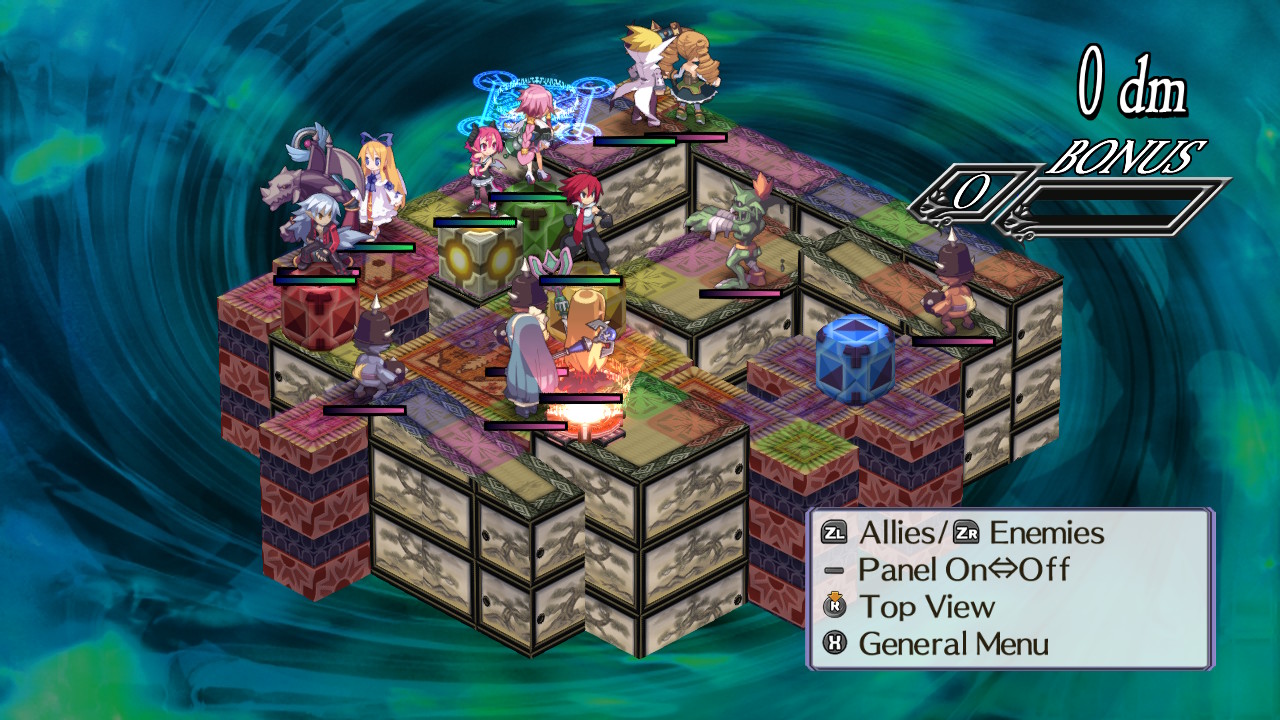
The game operates a lot like a conventional Tactical RPG like Fire Emblem would (well it doesn’t, but to say the Disgaea series doesn’t owe anything to old school Tactical RPGs would be just plain ignorant). It has a square grid, you move units, you attack other units, there’s environment effects, and whatever else you can think of.
Of course, it’s more complicated than that, but I don’t want to take three thousand words explaining the zany nuances of throwing your team members into enemy units to damage them. Or what a counter-counter-counter-counter-counter hit is. That’s the kind of game Disgaea 5 is and you’re just going to have to accept that.
Where it gets zanier though, is the games systems outside of combat. Disgaea gives you the tools to customize and do what you want with your play experience, in whatever way you like.
Take the Item World for example. If you find a weapon that you really like and want to make it stronger, you have to go inside of it and upgrade it that way. You end up going into that item’s own alternate dimension, filled a hundred levels, killing monsters and acquiring buffs as you progress.
As you delve deeper into the item, the stronger the item gets, whether that’s a sword or a pair of glasses. And the ‘buffs’ you acquire are actually demons that you can subdue within the item world called Innocents.
It’s insane. Not only the concept of going into an item’s pocket dimension and killing the monsters inside of it, but the nature of the system itself. It’s like a game within a game. A person could seriously spend real-life days messing around with the Item World if they wanted to.
All of the game’s systems are like this. They’re all incredibly deep and complex. They can be tinkered with and experimented on for as long as the player wants.
If you want to strengthen a character’s skill, you can spend mana to incrementally boost that spells power at the Skill Shop. But if you do that, it also increases the resource needed to cast it. That increase will often be so great that a character will only be able to cast a spell once before completely running out of SP.
It becomes a decision that the player has to make, and it’s a decision with multiple layers. Do I want to boost that spell’s damage, or do I want low SP cost? If the cost of SP is too high, how long should I level up for before I have enough resource to afford the high SP cost of boosting that spell?
You can also level up the spell by casting it repeatedly, whether it’s a healing spell or a fireball. That’s entirely different from boosting its power. When you level up a spell, its cost decreases incrementally, rather than its power increasing. It’s another thing to consider when using the Skill Shop.
Whether you want to boost or level up a skill is up to you, but it’s a hard decision to make. Add on top of that, the other twenty-or so skills that your team might have and the amount of available mana you have to spend. The complexity of that decision goes through the roof.
These systems are all deep and complex and incredibly interesting. But they’re also pretty confusing. I know I’m not the only one who’s had to consult the wiki on a second screen like I’m studying for some sick test.
When should you unlock new classes? What team members do you bring into battle? Which ones do you send of in rocket ships to get experience points on their own? What items should you level up through the item world? What Innocents do you use? Which skills should you boost in the Skill Shop?
Well, it’s up to you. The game gives you the freedom to do what you want.
You can make one character the most brolic, overpowered creature imaginable. Or you can make the game harder for yourself by changing the rules in the Dark Assembly (I’m not going to bother explaining the particulars of this, I don’t want to spoil everything the game has, right?).
That freedom is a good thing. But unlike the elegance of a sandbox game like Breath of the Wild, it’s hard to really understand what you want to do, and for what reasons.
Obviously, it’s all in service to upgrade you and your demon army to be as strong as you can possibly be. But those upgrades happen so incrementally and come from so many different places that dividends feel almost microscopic.
And that’s not a critique of the game, not really anyway. It’s clearly the point. The problem is with me.
I find Disgaea 5’s unholy mix of freedom and complexity absolutely fascinating. It’s like a sea of infinite possibilities waiting to be discovered. I know why people can dump thousands of hours in to this series, I just don’t know how.
I know I’m not the only one like this. It’s why the series is so niche. When you hide endless freedom behind a four-foot-thick wall of complexity, it’s hard to find where the fun is.
But it’s that complexity that gives Disgaea its own flavor. Diving into one corner of the game’s systems for eight hours because you want to is what makes the series so fun for people.
Granted I wouldn’t know, that’s just speculation. One can only dream of the endless stream of serotonin that flows through a Disgaea players brain on a daily basis. I envy them.

 Slickaria!