
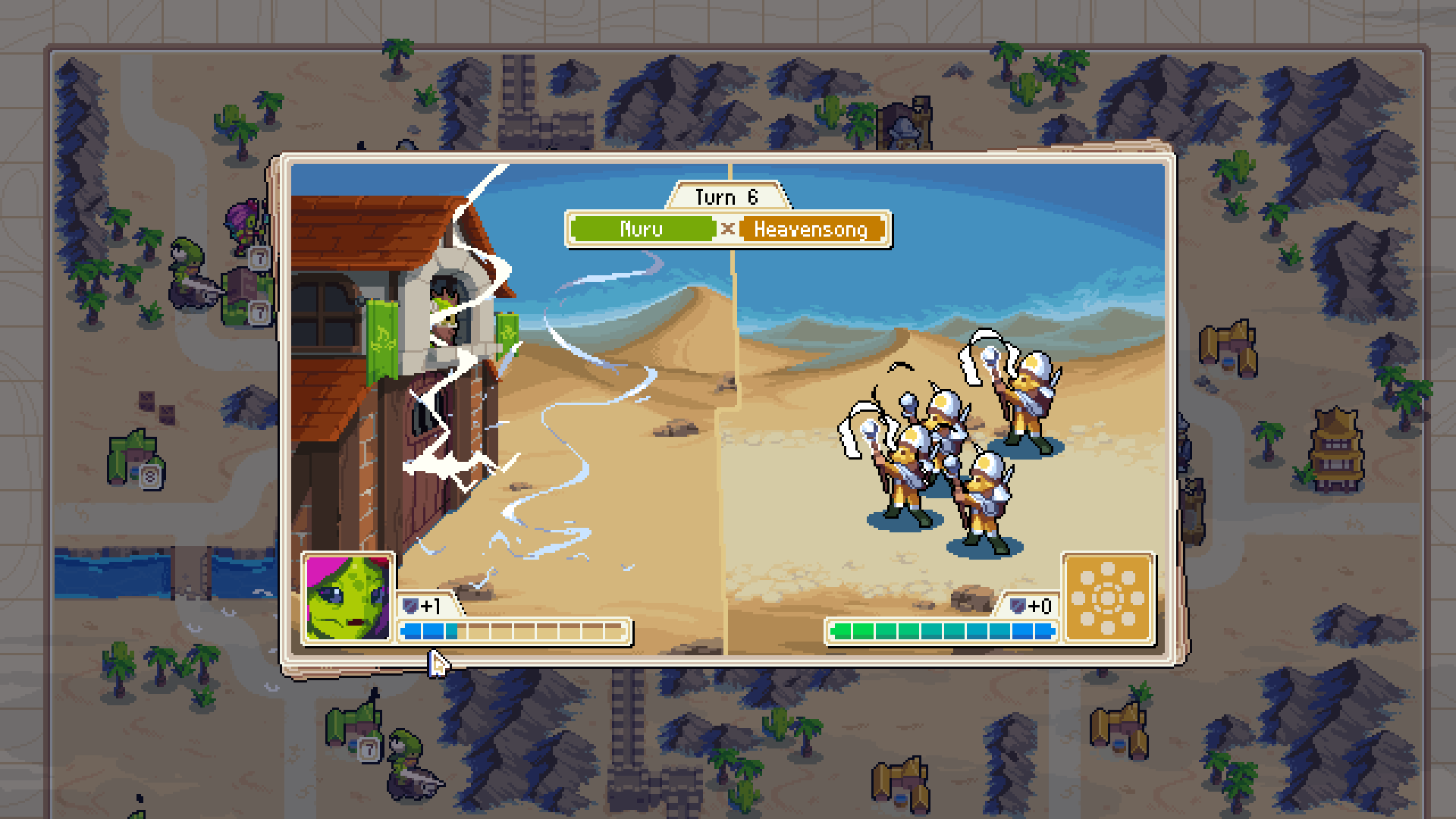
Losing an online match makes me want to inhale whatever comes out of the spray bottles lying under my kitchen sink
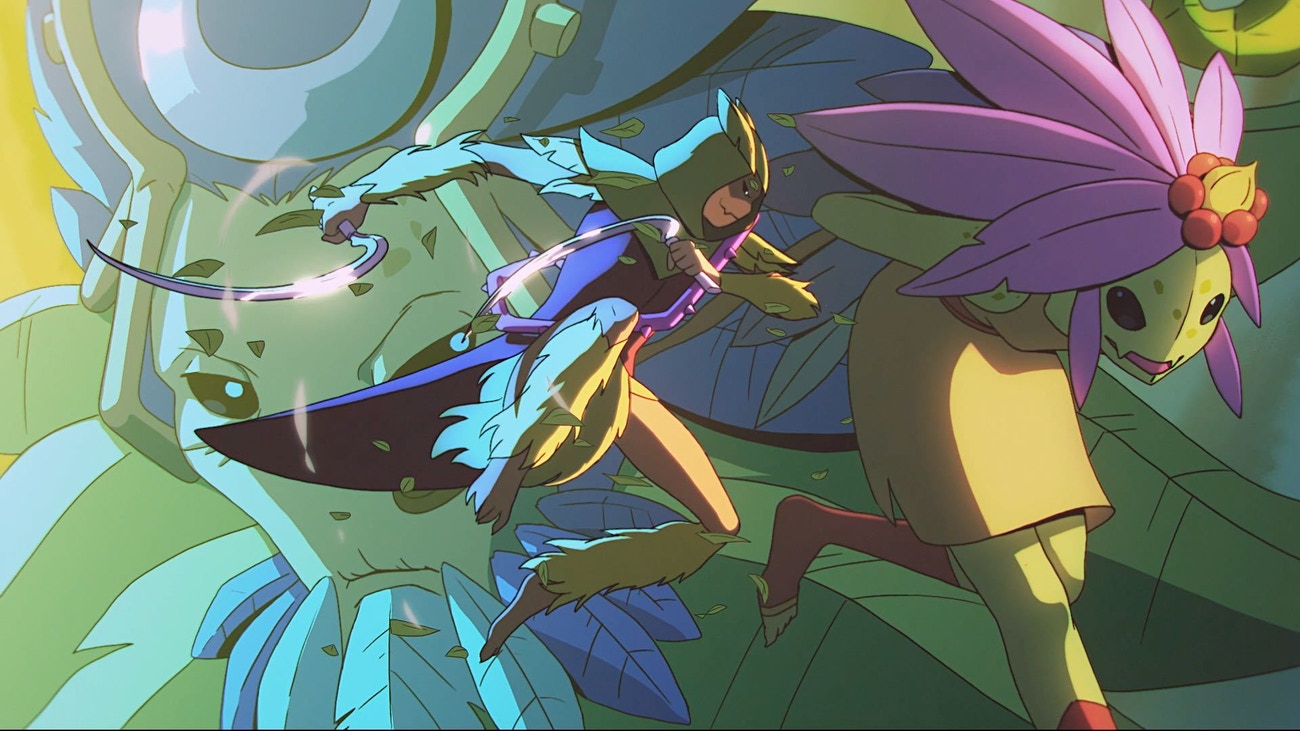
To me, the fantasy that playing a tactics game provides is to be put in a scenario where you can express yourself. On the surface, you might say that it’s being able to control a bunch of cool units like tanks and flying horses and mermaids with ballistic weapons. Or you might say – if you’re playing a tactics RPG like Fire Emblem – that it’s being able to level up your soldiers and teach them cool new moves. Or maybe you just like seeing pretty boys with long flowing hair stab each other to death. If you get a kick out seeing that kind of thing, if it gets you a little hot and bothered – that’s fine! All of these ‘features’ are deeply ingrained in the genre. But I think they’re all in service to self-expression… which doesn’t really make any sense, so let me explain.
I’ve always thought it would be cool if I could be Yang Wen-Li from Legend of the Galactic Heroes. Well, maybe not him specifically (he does have insomnia and is very unathletic and looks like he’s in dire need of help mentally), but I’d like to be in his position. What would I do if I was in command of tens of thousands of mile-long space cruisers armed with laser canons and computer guided missiles along with the millions of men, women, and everyone in between, operating them? And I know you’re probably wondering, out of all the things you could fantasize about being, why some random admiral from some old ass anime from the 80’s? (What do functional adults fantasize about again? Having money?). For some reason, I’m incredibly fascinated watching these characters sit in their comfortable chairs on the bridge of their flagships with a cup of tea served to them on a little coaster, making rather boring and mundane decisions like – should I or should I not send a hundred thousand people to their deaths in order to gain a small strategic advantage in this super cool space battle I’m currently fighting? It’s no big deal. Like, what? What is it like to make a decision like that? In fairness, the show does grapple with these questions. Some characters are actually surprisingly introspective, and wonder if they deserve any measure of happiness when they’re responsible in part for the gargantuan losses of life we see in the show. As cruel as this sounds though, I’m not really all that concerned with the loss of life – at least not for this essay. I want to know what it’s like to make the decision itself. What kind of thought processes go through Yang Wen-Li’s, Reinhardt von Lohengramm’s, and all the other principal character’s heads during these moments? Is it stressful? Is it taxing? Is it exciting? Considering how a lot of the characters act, it certainly must be all of the above.
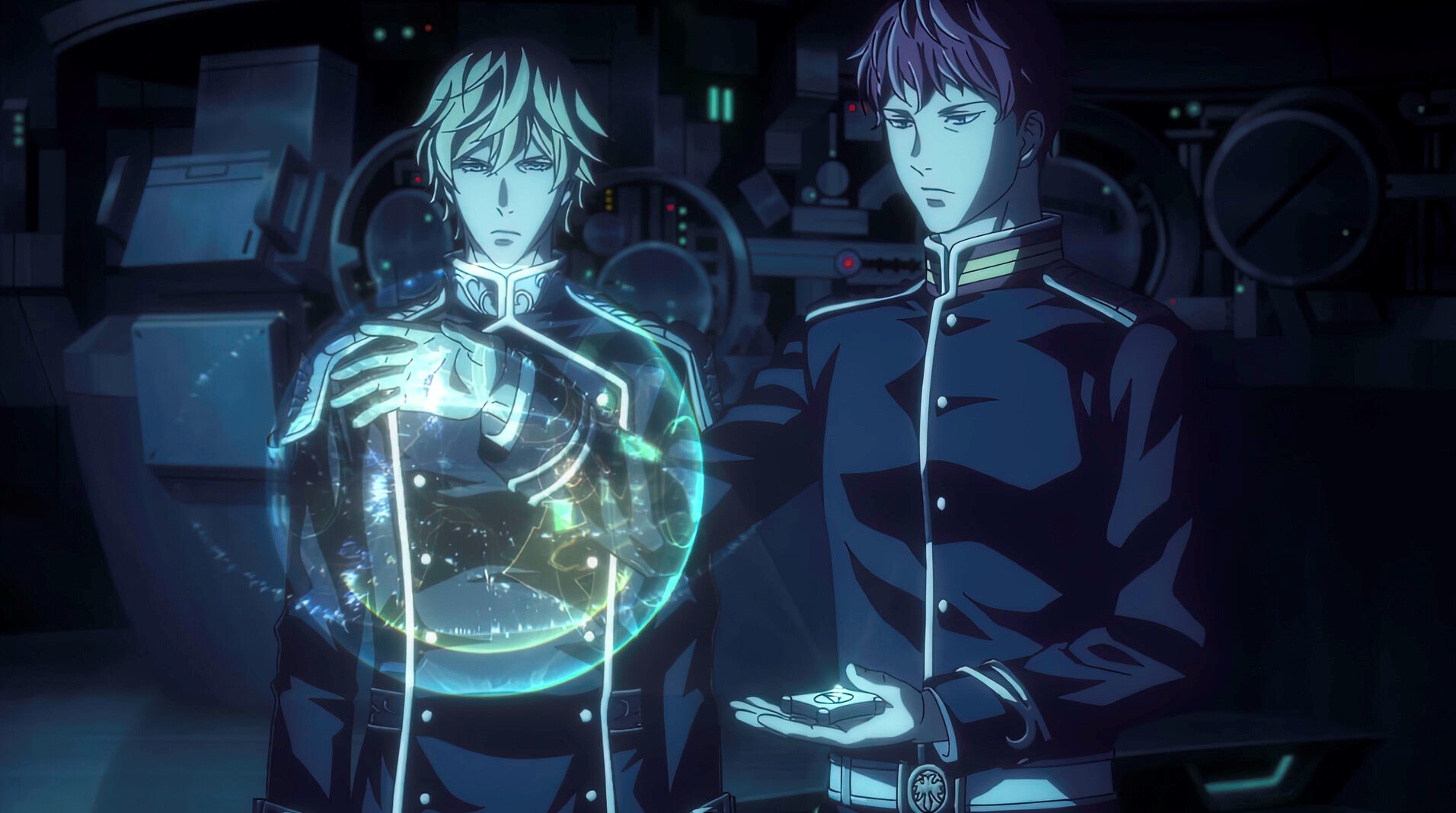
In the vastness of space, the possibilities are endless. In the show, we get to see characters discuss and engage in rigorous debate over how best to use their tens of thousands of cruisers, battleships, carriers, fighters, supply ships, destroyers, and everything else. And I’m going to be honest, although the show is mainly an examination of the politics of the modern age and how they shape our society and its people, it is seriously exciting watching them enact their plans. There’s one ‘arc’ in Legend of the Galactic Heroes that I love talking about. It’s pretty early on in the show, after – spoilers! – the alliance captures the massive Death Star clone Iserlohn Fortress, previously held by the empire. Because of the rot and decay of democracy in the Free Planets Alliance, political pressure mounts on the military to stage a massive, pointless invasion of Galactic Empire territory during the sweet peace afforded to them after their capture of Iserlohn Fortress (which is an interesting discussion in itself, but this is an essay about a video game if you can believe it, so I’m gonna go ahead and not talk about it). So, they do. But what should be a fairly easy liberation campaign, because the Galactic Empire is ostensibly oppressing the inhabitants of the border planets, turns into a nightmare for the FPA. Before the invasion, Reinhardt von Lohengramm – in charge of the defense of empire territory – invokes scorched earth tactics on the border planets; they steal practically all the food of their vassal settlements, and destroy anything they can’t take. When the FPA arrive, there’s no supplies to procure. And what’s worse, they’re forced to use their own supplies to feed the citizens of the empire. In a rush to bring more food, materials, and ammunition to the military, hasty supply lines are drawn, with not enough escort ships to protect them. Which is exactly what Reinhardt wants, and sends a fleet to cut them off. With no supplies on the way, the situation ends up becoming a disaster for the FPA, and in the ensuing battle – spoiler alert – they end up losing most of their fleets. We’re talking about millions of dead people, an insane loss of life. All because some idiotic, narcissistic, warmongering politicians needed votes for their next election – a topic that is not shied away from in the show, which is something that I really like about Legend of the Galactic Heroes. The name itself is almost a parody of the subject matter.
While it’s a really interesting discussion, I can’t help but think about how interesting the strategy of it all is. LOTGH is in part inspired by real people, real politics, and real events. Keeping armies supplied is one of the most important parts of warfare. The reason why Napoleon Bonaparte was so successful was, in part, because of the way he procured supplies. Instead of hulking along massive wagons of food, his men would race across the country side scavenging in houses, towns, and farms. That way, they could be magnitudes faster than their enemies and always be where they would never expect. But when he invaded Russia, all the farm land was burned down and Moscow set aflame, leaving the French with nothing and forcing them to retreat in the bitter cold winter months. I think he invaded with 300,000 men, and left with 20,000 – really sad stuff. It’s a terrible, and terribly interesting strategy – and it’s a side of warfare that I’ve never really thought about before. I think it also reveals a side to Reinhardt’s character that we haven’t seen before. He’s shrewd, and often cruel. He attacks the enemy’s supply lines first, letting them starve before going on the offensive. He’s willing to put citizens of the empire’s lives at risk, forsaking them to the enemy and stealing all their food. He’d argue that it’s for the greater good, that it’s the most efficient way to defeat the alliance – and maybe he’s right. But the citizens aren’t a part of the military, they didn’t enlist, or choose to fight. Their towns are just being ransacked by an authoritarian regime that claims to protect them, even though they’ve probably never seen them on their planet before in their lives. It makes me wonder what I would do. There are so many variables to consider, so many avenues to go down, so many little minute decisions to make – on both the alliance and empire’s sides. What if the invasion was spearheaded by a more competent human being? Or the supply missions were given more escort ships. Or what if the front lines weren’t spread too thin. How would we handle the chaos that ensued on the ground when the citizens ran out of food? Like Yang Wen-Li, it’s hard not to wonder what would happen if we had the authority to do things the way we want to do them. How would we outsmart Reinhardt – or anyone else – in a battle of ideas? If Reinhardt’s actions reveal him to be shrewd and cruel, what would our actions reveal?
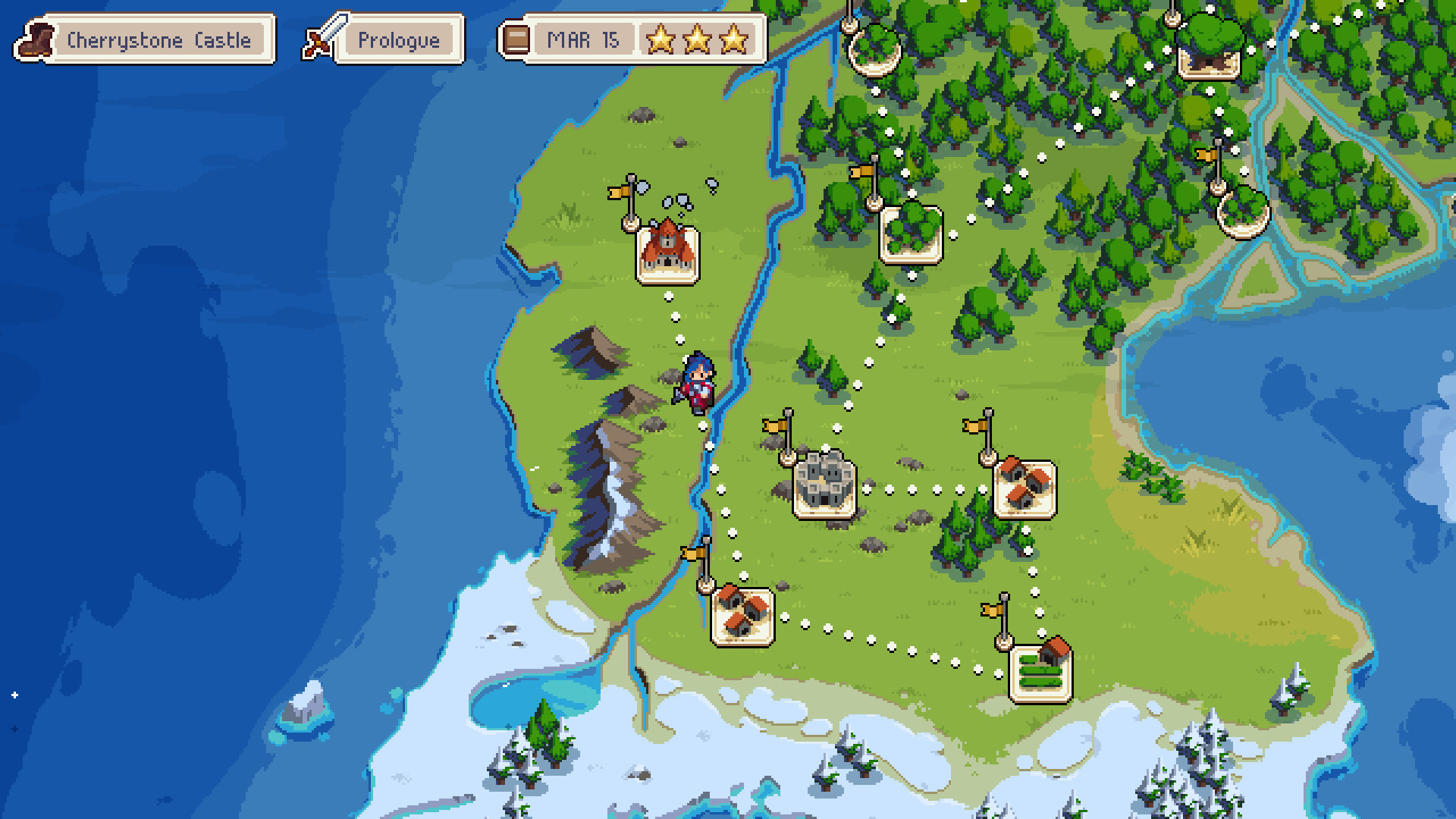
The thing is – at least for me – these aren’t active thoughts that I’m having while I’m watching Legend of the Galactic Heroes. The show is so much more than watching people getting shot to shit by lasers and cut up by axes and sucked off (into the vacuum of space). They’re more like subconscious thoughts that shift under the surface that make me appreciate these parts of the story more, which I think is a shared experience for most people that have seen it. I just haven’t really thought about it before until I played Wargroove.
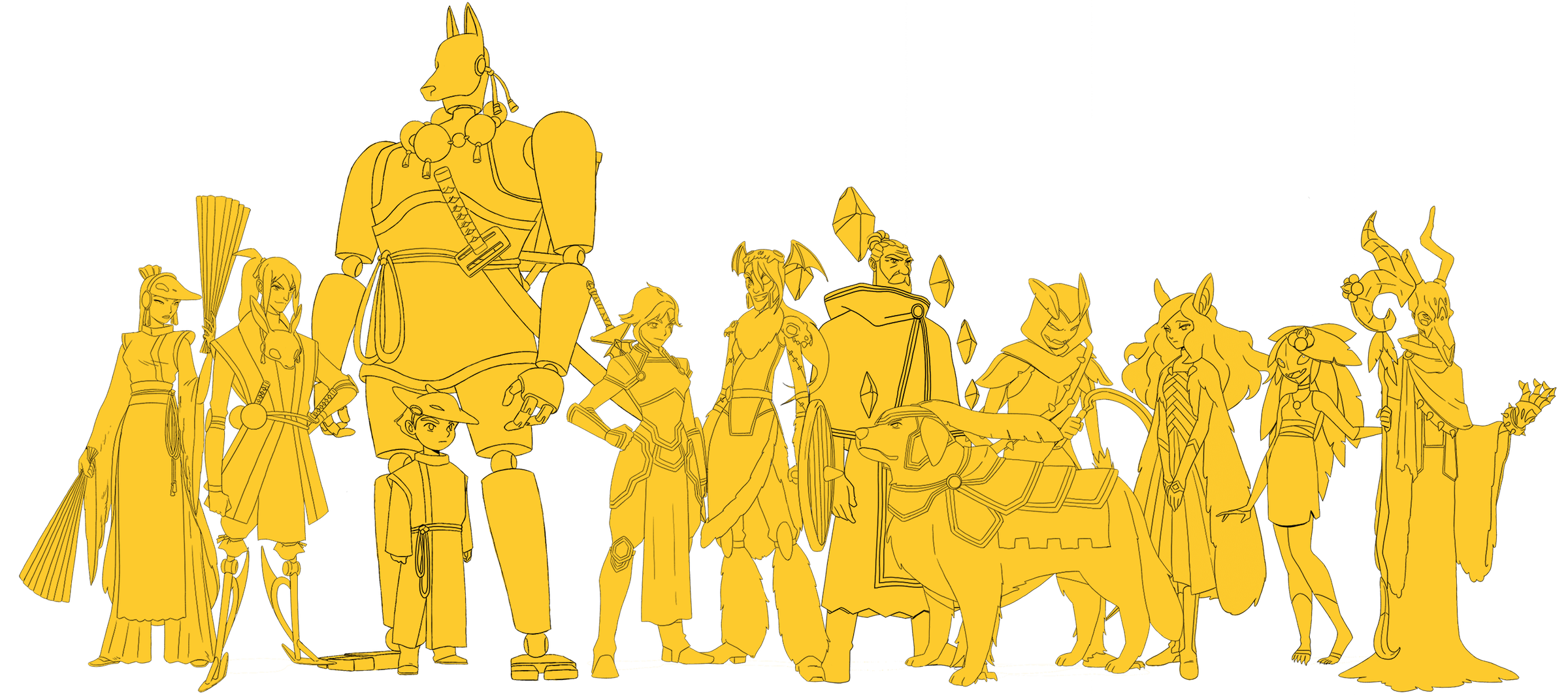
Wargroove is a turn-based tactics game developed by Chucklefish (the publisher behind Stardew Valley, among other things). It’s kind of supposed to be a spiritual successor to the series Advance Wars, which was first released in the US the day before 9/11 happened (yeah, that’s a thing), on the Game Boy Advance. I say kind of because two years after Wargroove’s release an Advance Wars remake was announced. Now, I’m not saying that this fucked over Chucklefish in anyway because, even as I’m writing this, the game hasn’t released yet – in part because of, well you know, everything that’s happening in the world right now. Plus, if you’ve seen what the remake looked like, I doubt Chucklefish would be remotely worried. Seriously, what were they thinking when they were working on this game? It looks like a mobile game, from 1995 (that’s not even a thing!). And if we’re being real, the original games weren’t exactly good looking either, I know it came out on the Game Boy Advance, but still. When I went back to look at the old games, it actually affected me mentally. Like, I got depressed. This is something that I really like about Wargroove: the pixel art is genuinely amazing! The sprites are unbelievably charming. You can tell how much care went into the character and unit designs. Each faction can use the same units. (Because if they couldn’t, it wouldn’t really be fair, would it?) But despite that, all the faction’s units look different. The faction of the main character is fairly basic: the soldiers are little pixel people with swords, helmets and armor, cavalry units are little pixel people on horses, the trebuchet is a trebuchet, so on, so forth. But the tree people, the people of the forest (that’s not actually their name I just made that up), their stuff is a bit different; the cavalry units ride cute little fluffy bison. The trebuchet is still a trebuchet, sure, but now it’s called a treebuchet. Holy shit! It’s this level of care and attention to detail that might seem trivial on the surface (to an absolute moron), but is so integral to the experience that when people say art doesn’t matter in a video game, it makes me want to throw them off a cliff and then jump off the cliff afterwards. For one, it’s just awesome. But two, this isn’t a dark experience like Legend of the Galactic Heroes. This is a game that is supposed to make human beings happy. Every time I boot this shit up, I have this idiotic smile on my face. War isn’t really supposed to be groovy, but one can forgive the game for its borderline offensive name due to how charming it is. Maybe that’s why I’m writing about Wargroove – not because of anything I’ve been talking about for the past 2000 words, but simply because this game makes me happy.
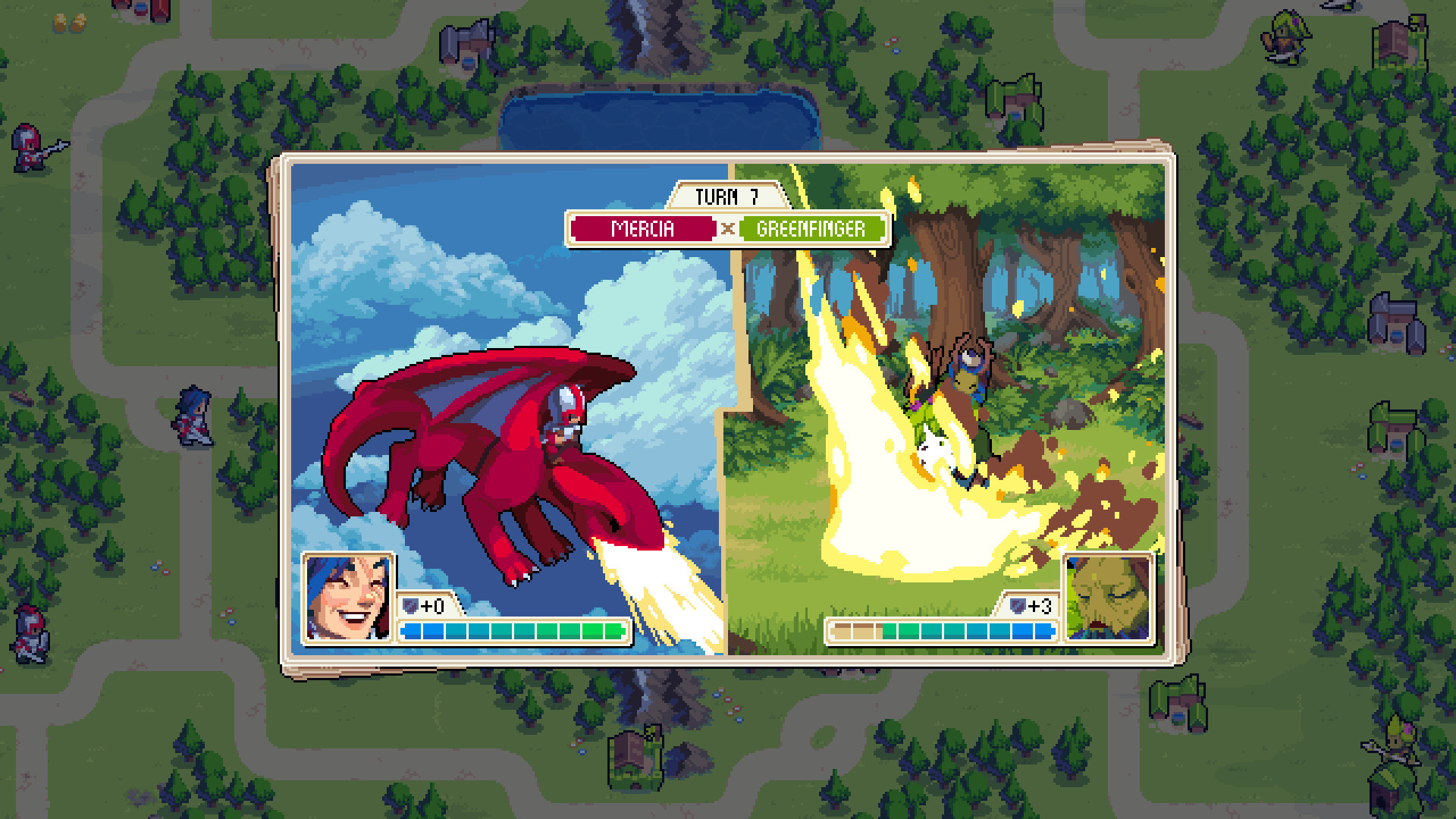
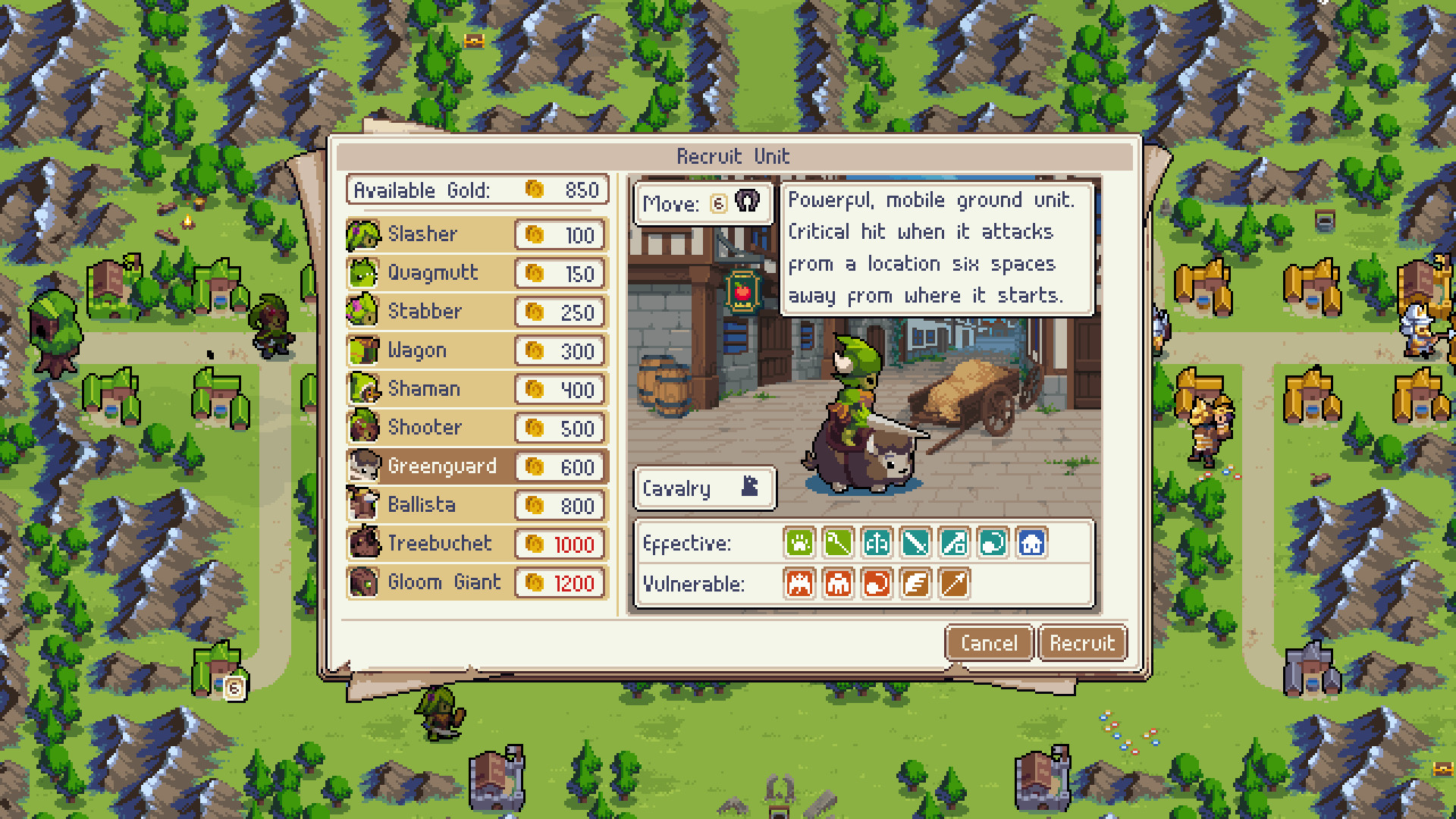
Seriously though, I think a good place to start if I want to explain what I mean by tactics games allowing for self-expression, is to stress how much freedom is afforded to the player in Wargroove. Yes, it’s a turn-based tactics game. My friend would call me a clown for saying that it provides any modicum of freedom. Freedom is something you have when you go outside, or at least when you play an open world game. When you think of freedom in a video game you might think of Breath of the Wild or something – but I’ll forgive you for thinking something so repugnant. You think running around in the grass and climbing up on cliffs is freedom? Let me show you what real freedom is. The main goal of most matches in Wargroove – both against A.I. and against human beings – is to destroy your opponent’s stronghold. It’s like League of Legends: just blow their shit up and you’re good to go, but blowing their shit up is way harder than it seems. Yes, you can destroy your opponent’s stronghold just by getting one of your units next to it and making it attack a couple times, but obviously, the other person can just kill that unit with one of theirs before it gets any where near their base – hence the game. Each turn, both players can spend gold to buy more units. You get gold each turn based on how many villages you have in your possession. The more villages you have, the more gold you have. The more gold you have, the more expensive units you can buy – because a dainty little soldier can be useful for only 100g, but a cavalry unit is one of the best ground units in the game, and can be incredibly useful for 600g (which is kind of a lot). But it’s not really as simple as: capture villages, get a lot of gold every turn, buy the most expensive unit you can afford. Because sometimes – no, a lot of the time – the most expensive unit isn’t exactly the best unit. For example, the most cracked and overpowered unit in the game, the dragon – which can practically kill anything on the ground in one turn and can’t be targeted by ground units – can get pretty much one shot by a ballista, a sky rider (look, I don’t make the names), or a mage. The last one is kinda crazy considering the mage only costs 400g, while the dragon costs 1200g! I gotta say, watching one of my dragons get domed by a poverty unit like a mage makes me want to drive my car into a forklift (it’s really sad). And yet, that’s kind of the beauty of the game. You have to actually carefully consider what you want to buy every turn by assessing what your opponent has on the field, rather than mindlessly buying the best thing you can afford.
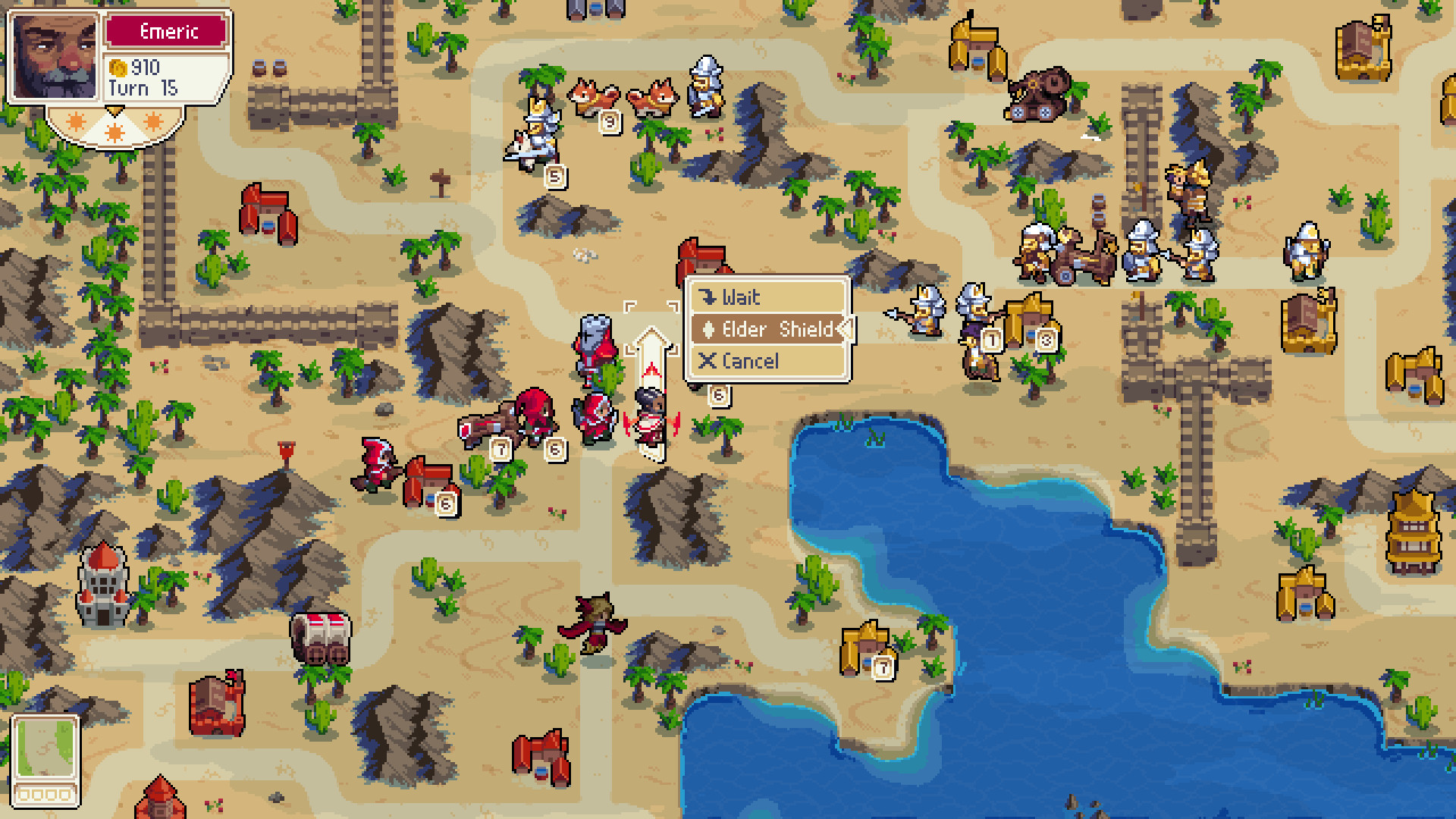
Complexity emerges from this beautifully elegant system in the same way the seeds of a southern cattail might emerge from a person’s mouth: it’s almost too much for the human mind to comprehend. As soon as a match starts and the map is revealed to you, the questions start pouring in. What villages should I capture first? What units should I buy first? What side of the map should I focus on (should I focus on a side of the map at all? Or maybe I might be better of spreading out my units evenly) Should I save my gold for a round so I can buy a cavalry unit next round? That way, maybe I can bum rush over to one of their villages and destroy it, that way they lose out on gold for the next round. Or maybe instead of going for the village, I can attack one of their weaker units and get it out of the way. Or maybe I should buy an archer or two and put them next to a village or by the river. That way, maybe I can defend my villages from any attackers, or do a shit ton of damage to them before they can cross the river. Maybe I should put them a forest so that in the event that they are targeted, they get the defense boost that being in a forest provides. I’m losing my mind; I haven’t even explained how units really work. What’s so sickening about the cavalry unit in Wargroove isn’t that it can move 5 spaces and attack 6 spaces (although that is an amazingly cool feature – and makes it the fastest ground unit in the game). What’s makes it so dangerous is that if it attacks 5 spaces from where it started – the maximum distance it can travel – it deals critical damage to its target. I gotta say, that shit hurts. While a soldier might do a quarter, or even less, to a village it’s targeting, a horse will do 95%+ if deals a critical hit. And let’s not forget actual sentient beings either. The cavalry will just delete a ground unit with a crit. Oh, you just spent 500g on an archer? I regret to inform you that your unit has been removed from the game. Oh, you spent 1000g on a trebuchet and spent the past 5 turns getting it to where the action is? You fucking idiot, don’t you understand how this game works? It’s hilarious. The upside is that, due to the rock-paper-scissors nature of this game, a horse will get waxed by a pikeman pretty easily (and they only cost 300g!) They already have a natural resistance to horses, one spear against one horse will always go badly for the horse, even if they deal a critical hit. But if two spear people are standing next to each other, the one attacking deals a critical hit; this makes them a really good defensive option, especially considering they can only move 2 spaces a turn.
Every unit in the game is like this. One of my favorites is the archer. The archer costs 500g, and doesn’t do that much damage – you’d be forgiven for thinking at first that something isn’t quite right with the arithmetic on the price for this thing. I mean, a spear person or a dog (200g) could annihilate an archer with just one critical hit. But the thing is. . . if you don’t move a bow person for a turn, the next turn, and for every turn after that you don’t move that unit, it will deal critical damage – and that shit hurts. If your brain is weak, you might think that this makes an incredible defensive option. But what makes the archer truly unique is that, unlike all the other units, it can attack it’s target from 3 spaces away (if you ignore the sky rider’s AOE hex ability, which costs 300g to cast, and ignore the ballista and the trebuchet, but they’re not human and they’re expensive which kind of puts them on a higher plane of existence than the lowly pre-800g humanoid units – excluding the dog). All the other units have to be standing next to their target in order to attack it. But not the archer. You can put the archer behind pikemen, behind soldiers, behind commanders (we haven’t even gotten to commanders yet, I’m losing my mind), you name it – and they can attack with sickening impunity until the end of time. You know how Jaime hates archers in Game of Thrones? (Or A Song of Ice and Fire if you’re cultured). This is why. But it’s great! There’s so much you can do and mess around with in terms of a unit’s condition specific critical hits and their other unique properties, and also just how you place units on the battlefield. Aside from archers being placed behind melee ground units, there’s so much more fucking bullshit you can pull off in Wargroove. For example, air units can’t be targeted by ground units, unless it’s an archer or a mage (or a ballista – but as we’ve discussed the ballista is a higher lifeform, so it doesn’t count). So, instead of hiding an archer behind a melee unit that can actually take damage, just put it behind a harpy! The harpy can attack, the archer can attack, but whatever ground unit is in front of the harpy is only malding, unable to target the harpy and unable to reach the archer. Isn’t that fucked up? Or how about this incredibly specific scenario that happened when I played where there was an enemy harpy one diagonal space (two spaces) away from an enemy ballista. Usually, this means if you want to kill a harpy with an anti-air unit that’s near a ballista, it’s generally accepted that you’re going to end up sacrificing the anti-air unit. (It goes like this: the anti-air unit deletes the harpy in one turn because it’s strong against them (I mean, it’s called an anti-air unit for a reason), then the ballista deletes the anti-air unit in one turn because it’s… also an anti-air unit). But because the ballista has a range of 2-6, meaning it can’t attack a target in the spaces directly next to it; and because the harpy is one diagonal space (two spaces) away from the ballista, there’s actually one single space where an anti-air unit can kill the harpy, not even get touched by the ballista in the next turn, then in the following turn fly away outside of the ballista’s range. It’s fucking mental. But it’s those little things that constantly happen in the game that make it so much fun to play for me (plus the art makes me happy).
There’s something to be said about how elegantly simple, yet mind-bendingly complex Wargroove is. It’s almost like the complexity emerges from its simplicity. Whenever I think about this weird dichotomy my mind goes to a comparison that would get me lynched if I talked about this in public. But I have to get something off my chest. I hate Xenoblade Chronicles 2. I hate everything about the game. I hate its perversion of the Shonen manga/anime genre that I love so much. I hate the English dub. I hate the character designs. (But, before I continue, allow me to get something else off my chest. Hate is a strong word. I don’t really hate the game; I hate racists. I actually like the game; I think it’s great! It’s just not really my thing. I just say I hate it because I think it’s kind of funny, but it’s not really that funny at all. Game development is hell. I have this immense respect for anyone that works on any game. Voice actors, programmers, writers, designers, artists, QA, you name it (as long as they’re not a piece of shit). Xenoblade Chronicles 2, like most games that exist in our plane of reality, is a wonderful achievement – and I’m glad it’s here. I’m also glad that people find the remaster of the first one fun too. What a time to be alive. People have too much ‘hate’ in their hearts. I don’t think I’ll ever understand how human beings can be so incensed by a video game’s existence that they get mad at developers to the point where they harass them on Twitter, or message them death threats, or send them seizure inducing videos that could actually kill someone. If I hate anything, it’s people like that. So, I don’t actually hate Xenoblade Chronicles 2. I fucking love Xenoblade Chronicles 2. In fact, I might play it right after I finish writing this thing (whatever this thing is at this point)). I love Xenoblade Chronicles 2. One thing that I dislike about it though, is the combat. Unlike Wargroove, the combat in this game has a lot of systems. There’s always some bar you have to fill, or some button you have to press at the right time, or some ability you have to use during a certain window. It’s too much. My brain hurts when I play this game. I haven’t played it in over two years, but if I remember correctly you have to use auto attacks to build meter for specials to build meter for heat attacks to build meter for a team attack. And if you want to do all of that you have to make sure your blades have abilities that synergize with each other and on top of that there’s like 50 different systems that you can use the customize your character and your blade – Like, what? Why I gotta do all that man?
The answer is simple: because it’s fun. It’s not complex in the sense that you actually have to think about anything beyond customizing your stuff beforehand in the menus (which to be fair is probably half the fun with regard to the combat). But it requires all the energy that my peanut brain can muster to press all the buttons in the right order. The systems are complex, but the game isn’t. Contrast that with another JRPG like Dragon Quest XI. The game is literally: hit the guy and win – and yet, I’m fighting for my fucking life every time I play this game man. Sure, you just have to hit the guy, or the monster, or the dragon or whatever. But if you play on hard, it’s not so simple. You have to lower the monster’s attack with debuffs so you don’t die in two turns (also, it helps to up your own party’s defense as well). If you want to get over with the battle as soon as you can so you don’t die and save mana, you might want to lower the monster’s defense and up your party’s attack too. But who’s going to waste a turn buffing everyone, especially if it’s earlier on and you don’t have party wide spells? Let’s not forget that they only last three turns too, meaning that whoever’s going to be casting those spells isn’t going to be doing shit else for the rest of the fight. And who’s going to heal – who even has healing spells? At this point, I’m barely able to attack with any party member since I’m doing damage control at this point, but someone has to do something. Maybe the Hero, or maybe Kamui (Erik), he does a lot of damage right? But he also takes a lot. Maybe if he had more evasion – if he could just dodge one attack – no? He’s just gonna get waxed like that? Okay, maybe I should try a different formation – maybe reconsider everyone’s armor. Also, enemies attack characters more frequently that are higher up on the party list, so I should change that too. It’s too much. But in the best way possible. I love agonizing over every turn in Dragon Quest XI. The systems are so simple, but from that simplicity, emerge complexity. It’s strange. I think it’s because when the systems are simple, everyone has an easier time understanding their full potential. When you can see every possibility and aren’t burdened with trying to figure out how those systems work in the first place, the game kind of opens up, in a way.
To me, this is a huge part of why Wargroove is so fun to me (aside from how charming it is). Its difficulty belies its simplicity; its simplicity is what allows me to have the freedom to play the game the way I want to play it – and with purpose. I’m going to be honest, I fucking suck at this game. I said I wanted to roll play as Yang Wen-Li, but if I were in charge, my subordinates would tie me up and throw me out of the airlock day one. I have never won a single match against a human being in my entire life (aside from my friend who had never played a single match in his entire life). I don’t know what it is. They’re just on another plane of existence, in a higher realm that I’ll never reach. They just know what I’m going to do, at all times. It’s almost like they’re cheating. Yeah? You just spend 1200g on a dragon? Guess what it just ran into in the fog of war: a 400g mage on a mountaintop (this is how they deal critical damage). It also doesn’t help that pretty much every single PvP match I’ve played had fog of war turned on, which I’m not a fan of. It changes the game in really interesting ways, but I’ve always played by reacting to what my opponent was buying, and what they were doing on the map; and if you don’t have dogs on the mountain tops (that’s their special thing, every unit gives vision in the fog of war, but dogs on mountain tops are like CCTV cameras: they always catch you doing some weird shit), you can’t really see anything, and you end up having to guess what they have and where they’ll be. Which feels like a huge element of the game is taken out and replaced with foreknowledge – meaning you build on past experiences to assume what your opponent will do, and I’m not really a fan of that. Don’t get me started on the A.I. either. The number of times I’ve lost to these androids is a figure that I will take to my grave. But despite that, I’ve gotta say, losing is actually kinda fun!
Seriously, I’ve never once felt frustrated after losing (at least against A.I., against humans is a bit different, my pride is on the line). I think it’s because when I lose in Wargroove it feels like I did something wrong. It feels like I did something wrong because in any given match the possibilities feel endless. Instead of buying that mage, I could save for a turn and buy a ballista to defend against the dragon that’s about to lay waste to my shit. Instead of attacking on every part of the map and spreading myself too thin, I should focus all my resources on a single point to punch through my opponents’ defenses, starting with horse units so I can one shot the villages and cripple their economy. (Side note: I love the images some of these unit’s paint in my head. Cavalry units are good at destroying villages, and I can’t help but imagine a bunch of fucked up dudes on horses burning down people’s houses in some medieval style setting. All the units paint a picture like this. Archers stake their arrows in the ground and lose volley after volley on idiots from a defensive position, spear people line up together in a formation like a Roman phalanx, dragons lay waste to everything in sight. It’s almost inconsequential, but to me it adds a really unique flavor to the game. I guess deep down inside I’m still a child that likes to imagine my little toys coming to life. I enjoy the fact that these units mimic reality in some tangential way. Maybe because it feels more meaningful and interesting to play a tactics game that parallels real world tactics, even if it’s in the most gamified and surface level way possible. But if we want to talk about things in terms big and serious video game design, having units based in actual reality is intuitive to me. I don’t have to sit there for five minutes trying to figure out why an archer would deal critical damage by staying in place for a turn, or for a spear person being next to another spear person, or why dragons crit when their target is on the road. I read the rules, and it just makes sense!)
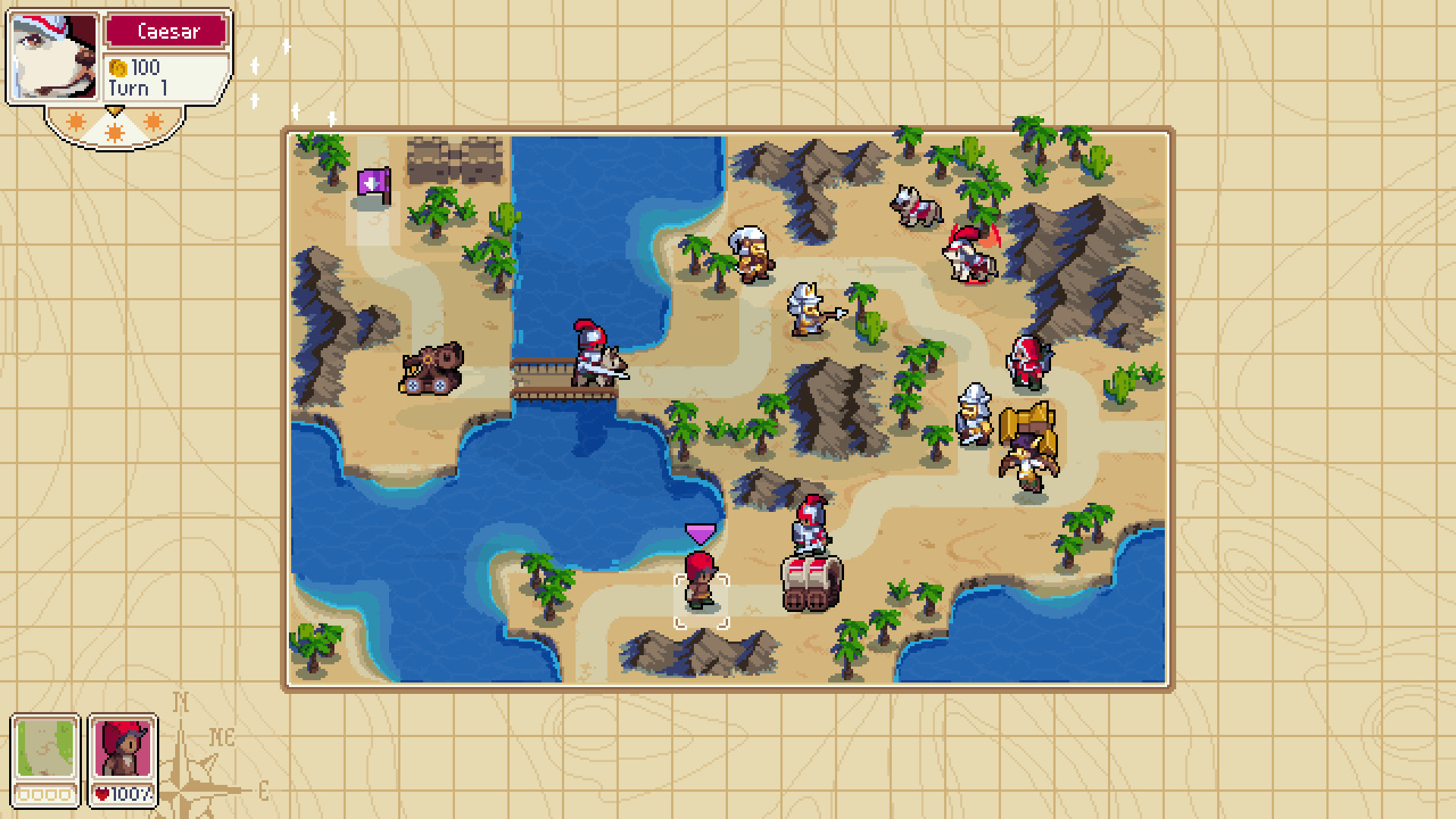
It’s fun to try and figure out what you could do differently when you lose in Wargroove, and no where is this more obvious than in the matches where the map is so big, you have to scroll to see it all. My favorite mission in the game is actually like this. It’s almost a battle on two fronts, because you have the bottom half of the map, which is mostly land, and the top half, which is the sea. There are also a couple islands scattered in there. Then there’s the left half of the map which is the stronghold you have to destroy that’s inside of a castle. Oh yeah, I haven’t even mentioned that there were sea units in this game – which further adds to the absolute clusterfuck that ensues later on in these huge matches. It helps that the art style – on top of being incredibly pretty – is also very readable. You can tell what each unit is at a glance, you don’t have to waste time hovering over every single thing every turn, which is helpful for when there are 60 fucking units on the screen (I’m not kidding when I say 60, and that’s a conservative figure). Sea units are great, by the way. What’s nice is that they aren’t some separate thing cordoned off from the rest of the game. Warships, the most expensive sea unit in the game at 900g, are one of the best ways to deal with all land units, including villages. What’s so barbaric about these things is how far their range is (2-5), and how much damage they deal (it’s a lot). Yes, they have to be in the water – that’s how ships work – but 5 spaces is not a joke, in this game, that’s far as fuck. The truly sickening thing about warships though, is that they deal critical damage when placed on a beach tile. If you target a land unit in this way, it is a guaranteed instant kill, including villages! And land units can’t even attack them! (except for archers, ballistas, and probably trebuchets). You will lose if you let your opponent run wild with these things. The upside is that they can’t attack air units, so all it takes is a harpy or a dragon and they’re done. But they could have a harpoon ship somewhere, which does a lot of damage to air units, and has a really long range… Nothing is simple in this game. You have to think 2 steps ahead to beat the A.I., and 8 steps ahead to beat a human being without tearing your hair out. In the case of my favorite mission, I learned this the hard way. I played that match for an hour and a half before realizing I was going to lose. But unlike losing in the hour-long fight against Yaldabaoth in Persona 5, I actually looked forward to trying to do things a bit differently.
Before, I spread my units too thin. I bought too many of and the wrong type of sea unit: fish people. They can go on land and sea, which makes them good for capturing villages located on islands (since it’s kind of a lot of work to buy a barge and fill it with land units just to capture one measly village on an island), but I had no use for them beyond the first couple of turns. I also let one of my commanders sit on an island doing nothing for the entire game. I also didn’t buy enough land units to go on the offensive on the bottom half of the map. It was a mess. I could hear the A.I. maniacally laughing at me as it kept releasing new warships from the harbor right next to where my land units were and there was nothing I could do about it. During the next match, I made it my mission in life to capture that harbor as soon as possible. I bought sea units, but instead of idiotically sailing them around for 18 turns, I put my warships on beach tiles on the bottom half of the map and laid waste to this fucking android. I bought a bunch of land units and focused all my attention on the bottom half of the map. I couldn’t care less what happened up on the top half, and the A.I., gaining some measure of sentience, capitalized on that. But all it really takes to defend an area of the map in Wargroove is a couple of thoughtfully placed units that can counter whatever your opponent bought. It doesn’t really matter if your units die, all you need to do is stall until you win. After I captured the harbor on the bottom of the map, it was pretty much over. It’s funny, this one little tile can change the entire game. Harbors are where you can buy and place new ships – it’s the same thing with aeries (for air units) and barracks (for land units). They’re a pretty important part of the game because the more barracks (harbors/aeries) you have the more units you can buy each turn. Also, it helps if they’re in a more strategic location, like nearer to where the action is. Once the harbor was mine, I was able to send new warships, harpoon ships, and barges full of land units up the river and annihilate any land units on that part of the map. After that it was simply a matter of waiting a few turns until I could drop the sword on my android adversary.
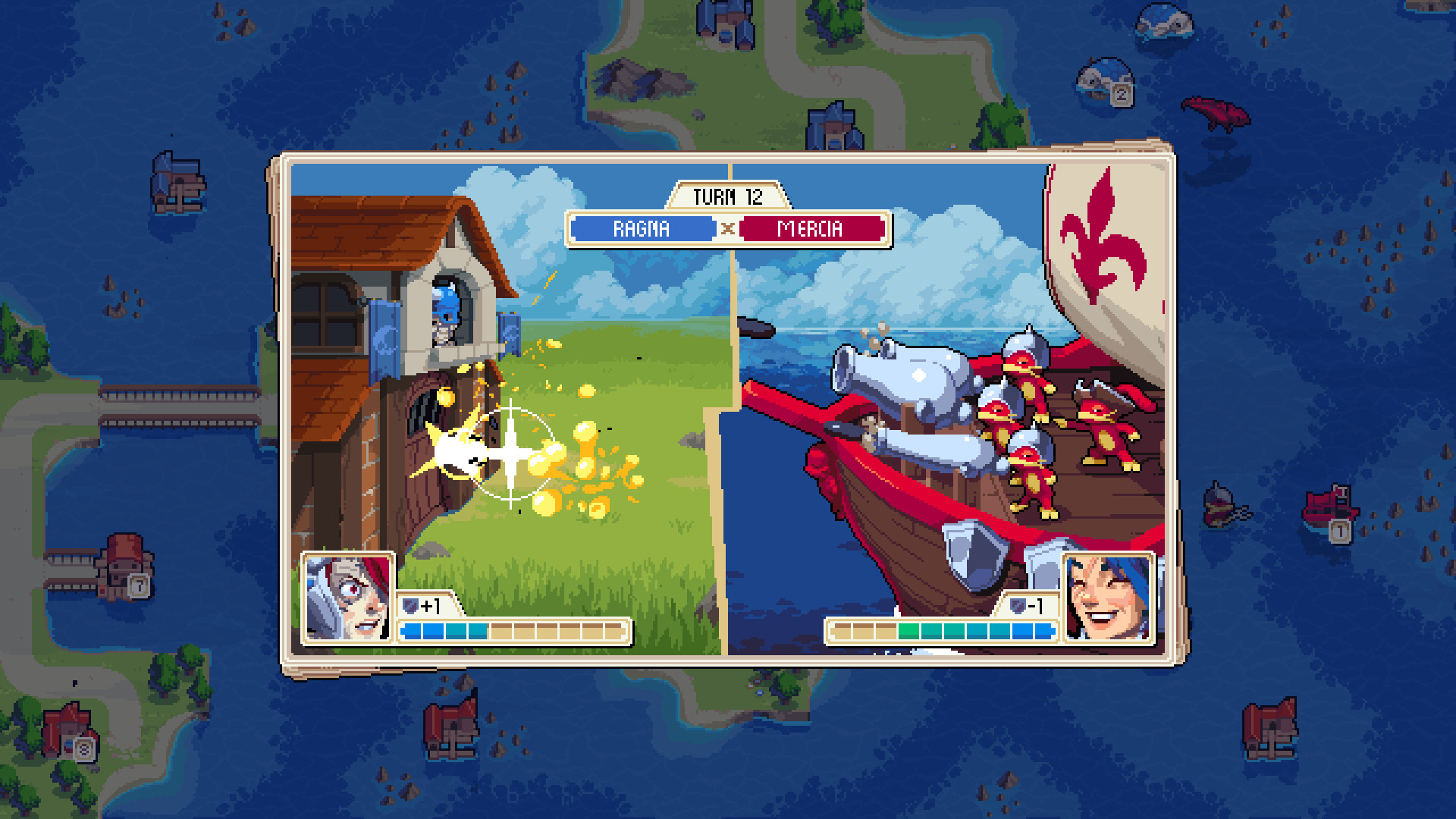
This is what I love about Wargroove. It’s so unbelievably strategic in the most fun way possible. Now, I’m leaving out a lot of details. I still had to carefully manage my economy and carefully consider what units I purchased each turn. I still had to sit there for 15 goddamn minutes thinking about if I should move my archer one space upwards or one space downwards so they can better defend a village against enemy units coming up the road. I still had to figure out when to use my commander’s special ability (which are literally called grooves) in the most efficient way possible. There are so many variables at play in these games, especially on a map that’s 50×50 tiles+, with air, land, and sea available. Even in the littlest things that on the surface don’t seem to matter. In order to get an S rank, the highest score for a mission, you need to win within a certain turn limit. There’s no provision for how many units need to survive, meaning you can turn your army into a meat grinder or those slave armies that the villains always seem to have access to in Marvel movies for all the game cares. I’ve never really enjoyed the fact that you have to keep your units alive in Fire Emblem. I know the games are about making your people stronger and leveling them up over time but I’ve always felt like it hindered the tactics of the game; missions become more of a puzzle you have to solve in order to keep everyone alive, which can be fun, but I think it conflicts with my tastes because I feel like I’m forced to play in a way that I don’t enjoy. And maybe that says something about me. Maybe I am the Marvel villain with an army of thralls that just throws them at the gates until there’s a pile of piss and blood and shit everywhere. Maybe I’m not like the virtuous Yang Wen-Li, but more like Reinhardt von Lohengramm. And you know what? That’s fine. I’ll be the fucking villain. So much strategy emerges from the fact that you can’t save all your units in Wargroove – but that’s the point. They’re expendable. Get your worth in gold out of them then throw them in the trash like the scum that they are. If you can sacrifice your horse (600g) in order to take out a trebuchet (1000g), maybe you should go for it. I don’t care if the guy riding the horse had a family or not. He knew what he was getting into when he signed up. It’s these variables make the game so complex, and I feel like it gives me the freedom to play how I want to play (like a maniac). And there is not a doubt in my mind that someone else played this mission by controlling the top half of the map and buying mostly sea units. I know it’s just as possible as the way I did it (in fact, the thought makes me want to boot up the game right now and try it out, that’s how exciting it is to experiment and mess around with this stuff). But that’s what makes it so interesting to me; your actions reveal things about yourself. I wanted to it the way I did it because, in a weird and childlike way, something about it excited me.
In the vastness of space, the possibilities are endless. I’m not going to pretend I’m going on a journey of self-discovery or anything, but I’m realizing that all my favorite games allow you to express yourself in some way. I might be a narcissist too, because I deep down in my subconscious there is this need to imprint myself in the games that I play. And if I’m a narcissist, so is everyone else. Why do you think people care so much about glamour in Final Fantasy XIV? You might say that it’s because people want to show off, but I really don’t think that’s it. People need to express themselves. To bear their soul out into the world, even if it’s in something as trivial as what clothes you’re wearing in a Japanese MMORPG. In fact, it goes even beyond that. I can’t speak for anyone else, but I want even the job classes that I play to say something about me. I love the aesthetic of the Astrologian, and if I wasn’t dogass at healing in the game, I would play it 24/7. I love the cards that you draw, and I love the art on them. I love the outfits and the little orb thing that your character uses as a weapon. I love the starry spell affects that invoke feelings of outer space. It’s just great. This goes beyond multiplayer games too. Outer Wilds is the furthest thing from a tactics game, yet its story is so open ended that you can approach it in any way you want. As a result, its story becomes your story. And it feels amazing (I know it’s kind of cliché to say that it’s something only games can do but it’s true!) I assume the sensation I get when I play Wargroove is similar to the one a character like Yang Wen-Li feels when he’s sitting in his chair on the bridge with a cup of tea on its little coaster: power. The power to – in the infinite array of possibilities – choose the way you want to do things. In a way that’s true to yourself. And the best part is you can almost validate your way of playing as the correct way if you beat your opponent – especially a human one. When you win against an opponent in a battle of ideas, it’s almost as if you’re saying your existence is more correct than theirs (which is probably the reason I want to inhale whatever comes out of the spray bottles lying under my kitchen sink whenever I lose an online match).
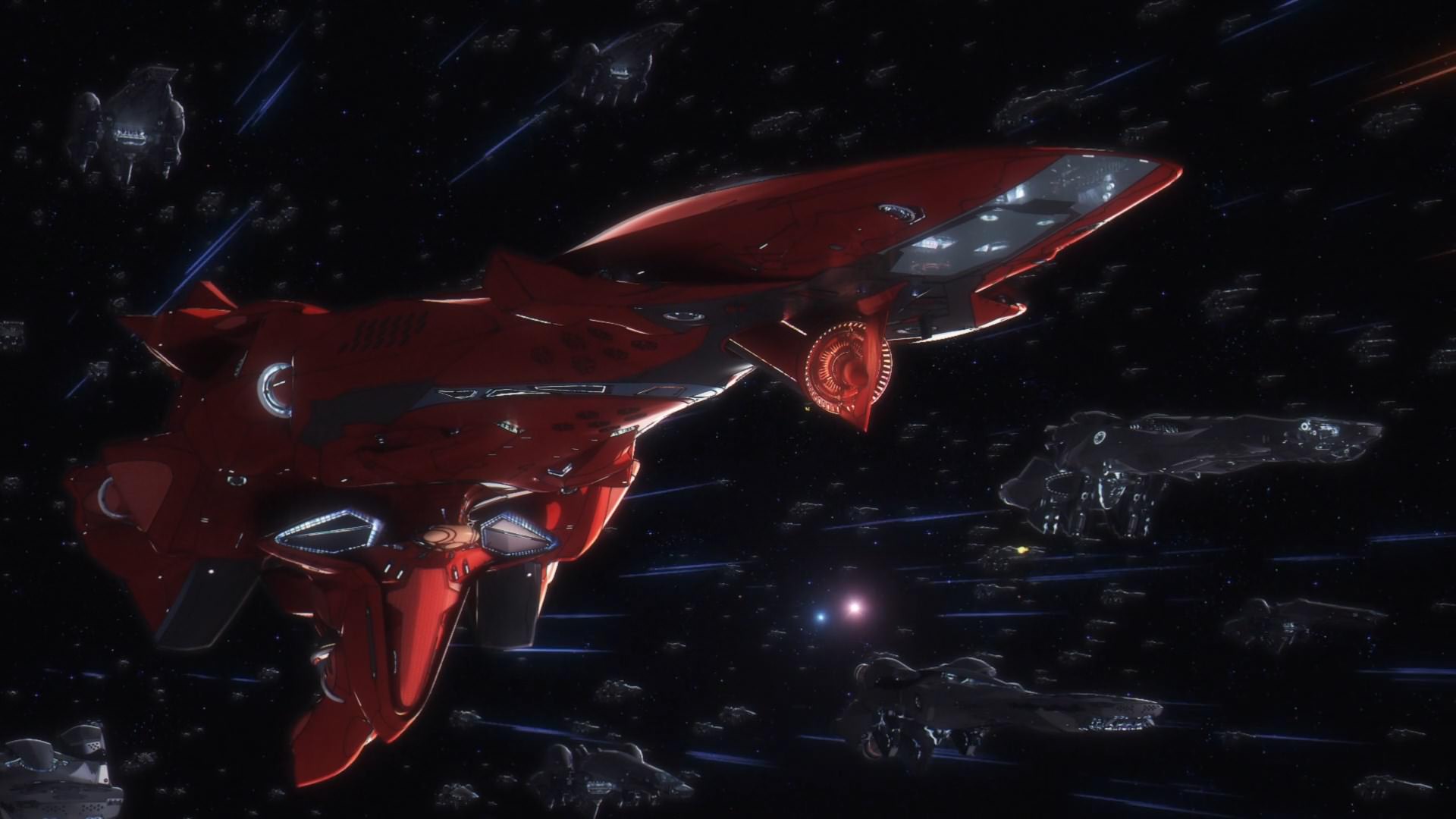
I am envious of these fictional characters and their opportunity to test their wills against each other to see whose existence is more valid – that is probably the source of my fixation with the admirals in Legend of the Galactic Heroes. I don’t want to kill anyone or cause pain, so it’s nice that I can do what they do in a video game. Although space lasers and power armor and just traveling the galaxy does seem pretty cool.
Thanks for reading.

 Slickaria!