
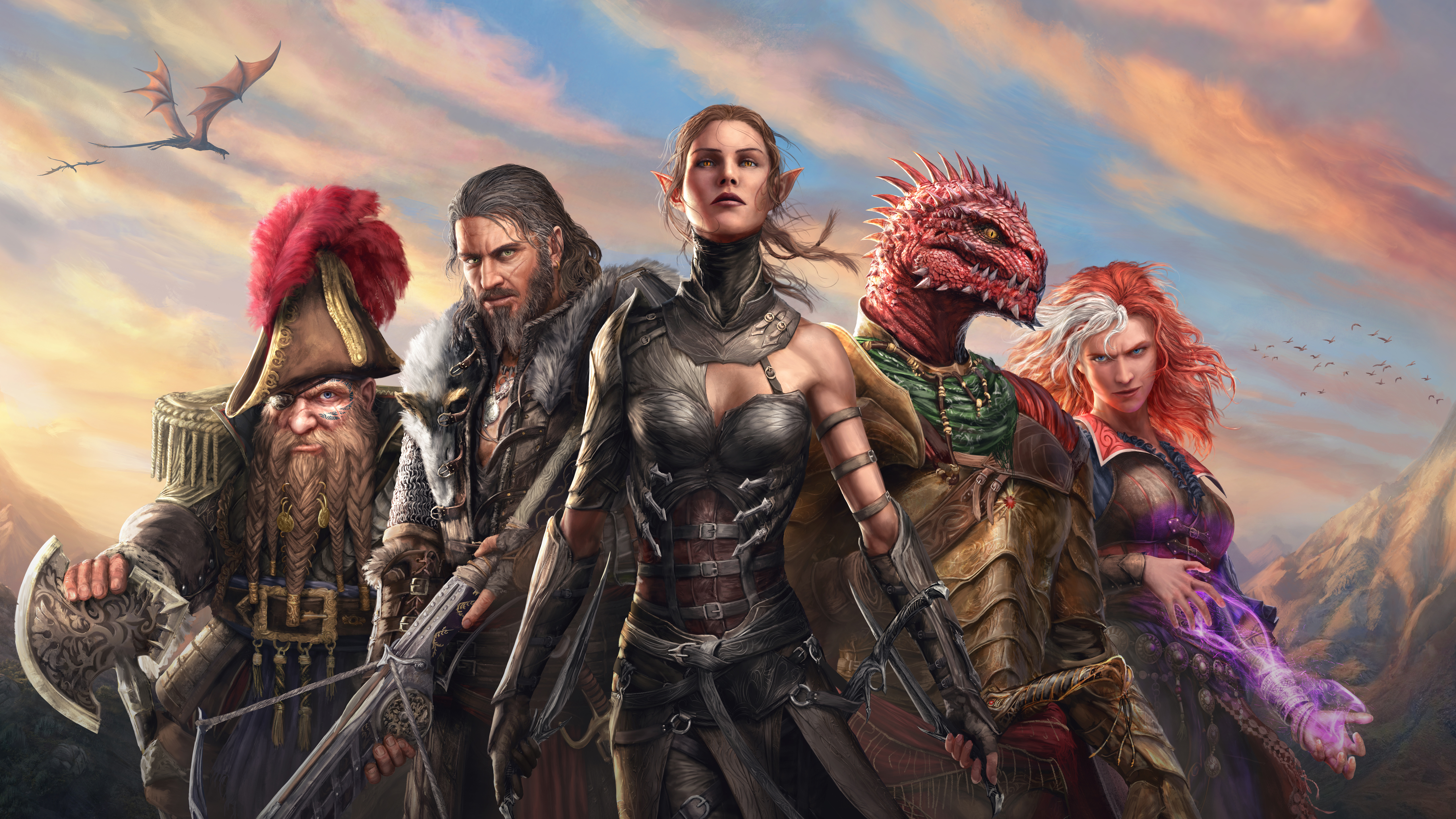
Divinity Original Sin 2 Review
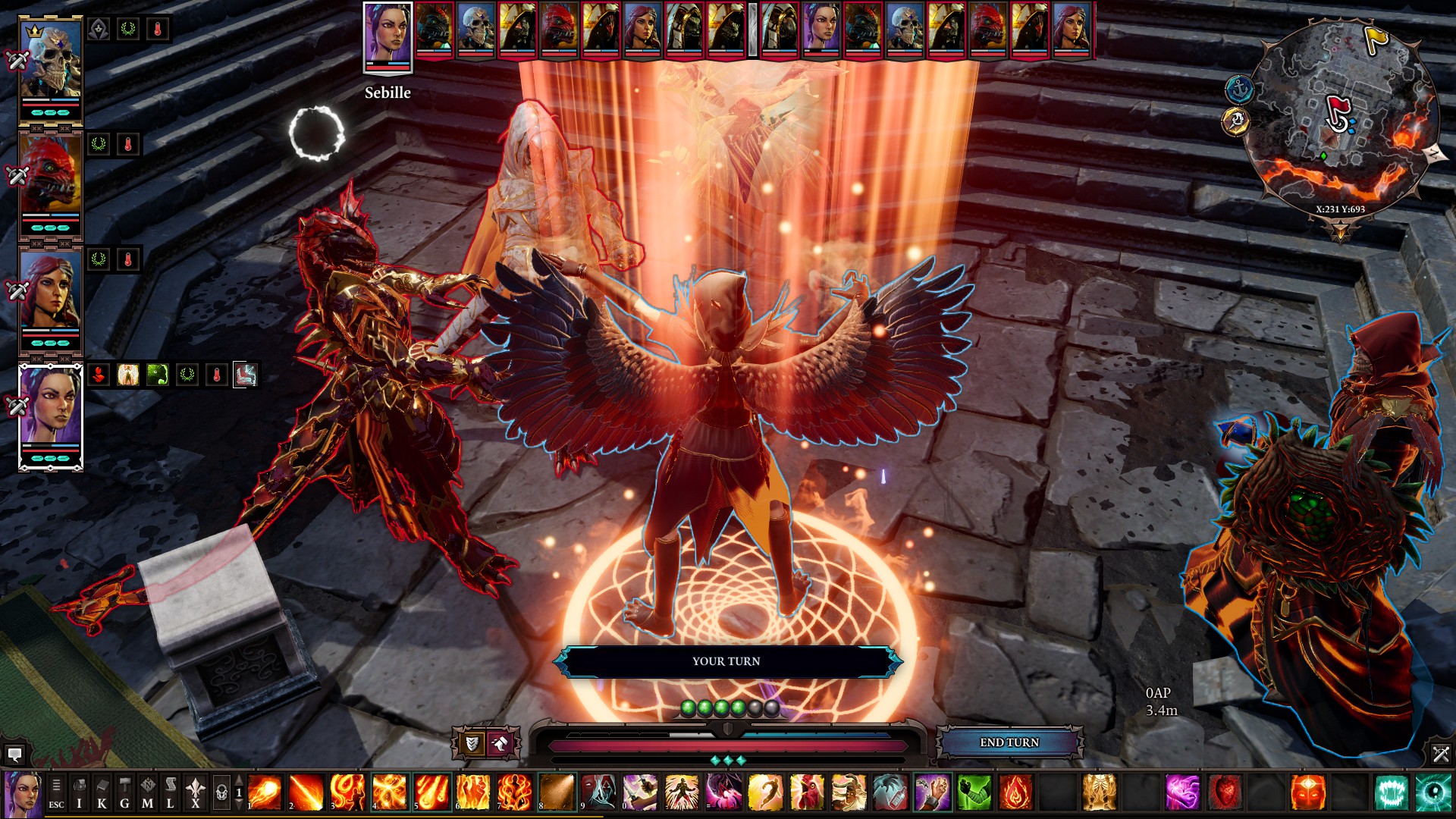
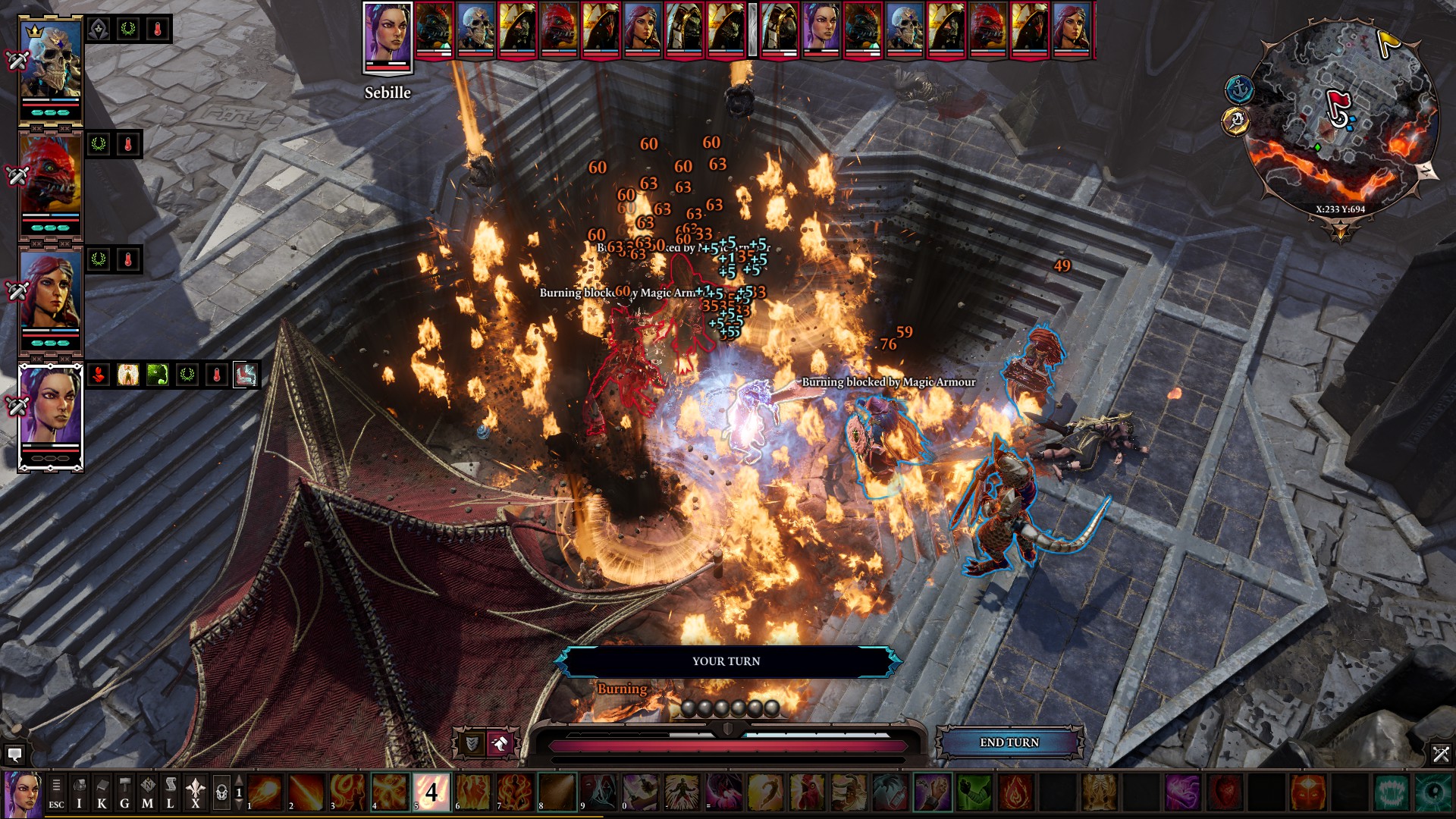
Divinity: Original Sin 2 is chaos. You can get fucked over in almost every way imaginable. You can get burned alive, frozen to death, fucking covered in acid, you can fucking slip on ice and get knocked down, you can get petrified if you’re too close too a character, you can get poisoned, you can get stunned repeatedly by electricity, you can get covered in oil and lit on fire, you can fucking turn into a god damn chicken – an actual fucking chicken, you can get slapped in a way that makes it so that your arms don’t work anymore, you can get teleported on top of a party member in a way that makes it so that you both take damage, you can get teleported into flames, you can get teleported into a puddle of oil and then lit on fire, you can get chained to a guy so that whenever they take damage you take damage, you can get blinded, you can get silenced, you can get cursed, you can get hit in the legs so hard you get crippled, and my personal favorite: you can teleport a guy into a puddle of water that has been electrified so that they get stunned instantly. Or – maybe that’s not my favorite. Maybe my favorite is using a skill called ‘Ruptured Tendons’ (to – well if I had to guess with a gun to my head, ‘rupture their tendons’) which makes them take damage for every step they take, and then turning them into a chicken so that they’re forced to run away. Or maybe it’s hitting the wrong barrel with a fire spell and setting the whole arena on fire to the point where it lowers your frames per second to 2. Chaos. It’s weird though because on paper it shouldn’t feel this way. Divinity is a turn-based CRPG with action points and cooldowns on skills, and yet it feels more insane that than the most ridiculous action game you’ve played or an ARPG where shit’s just flying everywhere. And I don’t know why.
Okay, maybe I do. At least a little bit. Some scholars might venture to call Divinity a systemic game. Systemic, meaning that like, systems interact with other systems… okay that makes no sense. Say you have a puddle of water on the floor in this game. If you shoot an ice skill at it, obviously, it’s going to freeze the water and turn it into a frozen surface. But what happens if you shoot, like, a fire ball at it? Well, then it’ll turn into a steam cloud. Sick. That puddle of water within the context of the game doesn’t exist just for the player to freeze it with their ice spell, it exists as a mechanic that could potentially interact with anything. You could zap it with electricity and turn it into a horrific OSHA level safety hazard that you end up seeing on safety videos at work or on LiveLeak where the guy just dies instantly and you have no idea what the fuck happened. You could launch a poison skill at it and, look, I don’t know exactly what that would do, but I’m sure it would do something and it would probably be very weird and fucked up. Unlike games with systemic interactions like Prey (2017) (one of the best games of all time) where you use it to solve puzzles – like, oh look the GLOO gun that you can use to encase enemies in mysterious fluid and put out fires also works as a step ladder that you can use to climb up walls and elevator shafts, nice! – in Divinity, is specifically used to fuck people over. You know that electrified puddle you made? Remember turn based game – a character could potentially get ‘stunned’, which is a unique status effect when you get shocked too much, and lose out on their entire next turn. If it’s an ice surface, they could slip and get the status ‘knocked down’, which – guess what – also makes them lose out on a turn. Even a steam cloud, which isn’t nearly as bad as the other two, will block your vision so you literally can’t cast spells beyond like a two-foot radius until you move outside of it. This isn’t Link’s happy fun time where he gets to chop down a tree to make a silly little bridge, this is a war zone and you will get your cheeks clapped if you move three inches in the wrong direction.
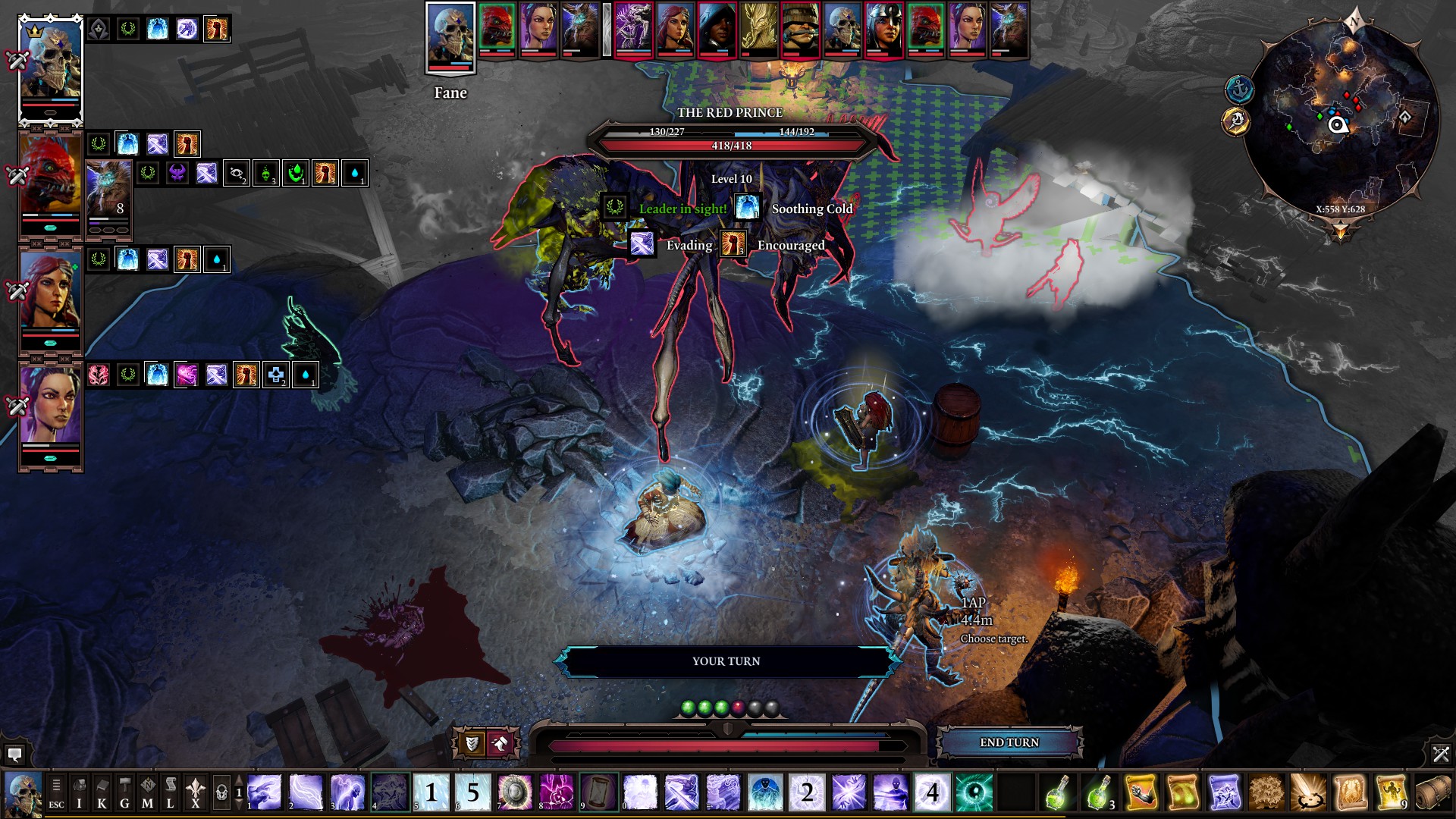
It’s really fun though. It’s like the developers looked at every surface you can make or that exists in the environment and thought – what would happen if you did ‘this’ to it ‘in real life’? If you light a flame on top of a puddle of oil, obviously the oil will catch on fire and fuck everything up, but just being in a dummy viscous substance like that would do something right? Boom, new status effect: ‘Slowed’. And being slowed is arguably worse that being lit on fire (in the game). When you’re on fire you’re on fire – like whatever, you just take damage. But when you’re slowed? Your movement speed is reduced to like 50% meaning you can’t do anything if you’re in the wrong spot, especially if you’re a melee unit. It is not fun watching one of your party members take their entire turn just to move two feet. It’s fun because it feels like there’s an infinite number of combinations of things you can do in an encounter – and there kind of are honestly. Whenever there’s an encounter, it feels like you get to solve a puzzle where you look at all of your spells, what your opponent is weak against, if they have more magic armor or physical armor, what the surrounding environment is like, where is the best position to be in, how many enemies are there, how close together are they, who should you go for first, I mean there are so many things that I could list that I could go on forever. It makes it so that even the most ridiculous unfair encounters where there’s a boss that’s three levels higher than you and has 5 adds that all repeatedly give it a fucking stacking 60% damage buff when he already has enough damage to one shot you on his own, feel like there has to be some combination of skills that you can use to win. And usually there is.
And this is the part that really got me addicted to the game. So, I originally played Divinity: Original Sin 2 in 2018, a couple months after the game launched, when everyone was talking about how it was one of the best CRPGs ever made, and it’s the return of the genre, and how there are so many different ways you can escape Fort Joy during the first act of the game – and I was like “That’s cap”, but I played it and it was genuinely one of the most fun RPGs I’ve ever played. I got all the way to the final boss during one of my breaks from college but went back before I could beat it – cucked. When I came back to the game months later, I was genuinely like, shook at what was happening on the screen during the final fight that I just gave up. Imagine everything I talked about so far dialed up to 11, I genuinely had no idea what was happening and quickly came to the conclusion that I would never beat the game which honestly was probably true. So, time skip to 2023, two weeks before writing this specific paragraph in this essay I find myself playing this game again after not playing a video game for like 7 months but wanted to play this game specifically because I just read Solo Leveling and went, “Damn, … I kinda wanna level up”. And this was the first game I thought of for some reason? So, I played it and I got to the final fight of the first act and just could not beat it for the life of me. No matter what I did I got clapped in like one or two turns. And I was like really bored and frustrated because I didn’t know what I was doing wrong and it felt like the enemy characters were way stronger than me, and Bishop Alexander was casting spells that I was almost positive I had no access to, and it just felt so unfair. But I have turbo autism and I was like nah there’s no way so I restarted the game after twenty hours spent playing act one with a new team composition. This time, I wanted to make a build that was just as cheesy as the enemies that cracked my shit in half during my first play through.
What I noticed is that there’s a surprising amount of depth in all of the chaos and supposed randomness that this combat system is. Out of all the knives and daggers and war hammers and poison and explosions, the littlest things are my favorite. Like, frozen puddles are really interesting because they’re extremely useful. Most status effects in Divinity need their target to have no armor for what they’re trying to block against. For example, if you want to set diseased (which lowers constitution by 2 and damage by 35%) or decaying (which makes you take damage from healing spells equivalent to how much they would heal you for), you need the target to have no physical armor left, which is a flat amount of armor on top of the regular health pool. Usually, when you knock someone down it’s from a physical damage ability like battering ram or seismic shock from the warfare skill books or a knockdown arrow which is a consumable item that rangers can use. But slipping on ice is different. A character can slip on ice and have the status ‘knocked down’ set on them, which makes them unable to do anything for a turn in the same exact way they would if they were hit by battering ram or a knockdown arrow, but they don’t need to have their physical armor depleted at all. All they have to do is try to move through the ice. It’s so juicy getting a knockdown on an enemy that’s trying to get to you by having them slip on ice because it’s comparatively very little effort versus the other way, especially if the dude has a shit ton of physical armor that could take multiple turns to get through. And you need everything you can get in this game, especially in later battles which are insanely hard. Also, ice isn’t something that goes away or is ‘used’ in the same way an ability is. The ice is just a byproduct of some other spell, and stays there; it can fuck over potentially multiple characters and can completely shut down an area of the room or arena you’re in during a battle. It’s such a juicy strategic choice and its super fun to use well, and its fun watching legendary heroes, knights, and magicians that want to cut your throat get put on their ass.
It sounds broken but it’s actually pretty easy to counter. All you have to do is melt the ice. Throw a Molotov grenade at it. It only costs 2 AP, which is typical of a lower-level skill, and you can get rid of the problem entirely. It only costs 1 AP if you have the ‘Ambidextrous’ talent which makes it so that scrolls and grenades cost 1 AP instead of 2 if you have nothing in your offhand. That’s cool because it is kind of bad to have nothing in your offhand. You can either use a two-handed weapon, dual wield one handed weapons, which offers way more damage, or my personal favorite, just use a shield since they provide the most armor and magic defense out of any single item typically of the same level. So why go one handed with nothing in your offhand? Well, on top of getting ambidextrous, each weapon combination provides a unique skill. If you have a shield, you can use a skill to restore your physical and magic armor equivalent to the amount of your shield, which is insanely useful (if you want you can use skill slots that might be used for magic shell (provides magic armor and cure some effects) and fortify (provides physical armor and cures some effects) for more offensive skills). Two handed and dual wielding each have a decently hard-hitting ability that costs 3 AP since if you’re using that option you probably want to do as much damage as possible anyway. For one handed, you get a punch. Which is fucking hilarious because everyone’s doing some insanely cool move and you’re just punching people, but what’s sick is that it also knocks people down. Granted it’s a normal knockdown not an ice knockdown, you have to actually deplete your target’s physical armor first, but it’s still incredible utility for being a skill you basically get for free.
What’s crazy is that I probably would have never fully appreciated the depth of the combat if I wasn’t so singularly focused on getting my lick back on a bunch of fucking computer characters. I feel like because I was forced to try so hard to win, I had to look extremely fucking hard for good combinations of skills to learn, and good stats to invest in, and good talents to get, which are all extremely interesting decisions to make. And after a little bit, after you’ve made all these interesting decisions a couple of times and you start to win encounters decisively – which to me, means no one in your party died and you didn’t have to use a restoration scroll – that’s when you start to believe that you can win any fight, no matter how challenging it is, and that’s when I started to really get hooked on this game. I could get fucking washed in one turn, have all my party members get like, actually one shot and be like: nah run that shit back real quick.
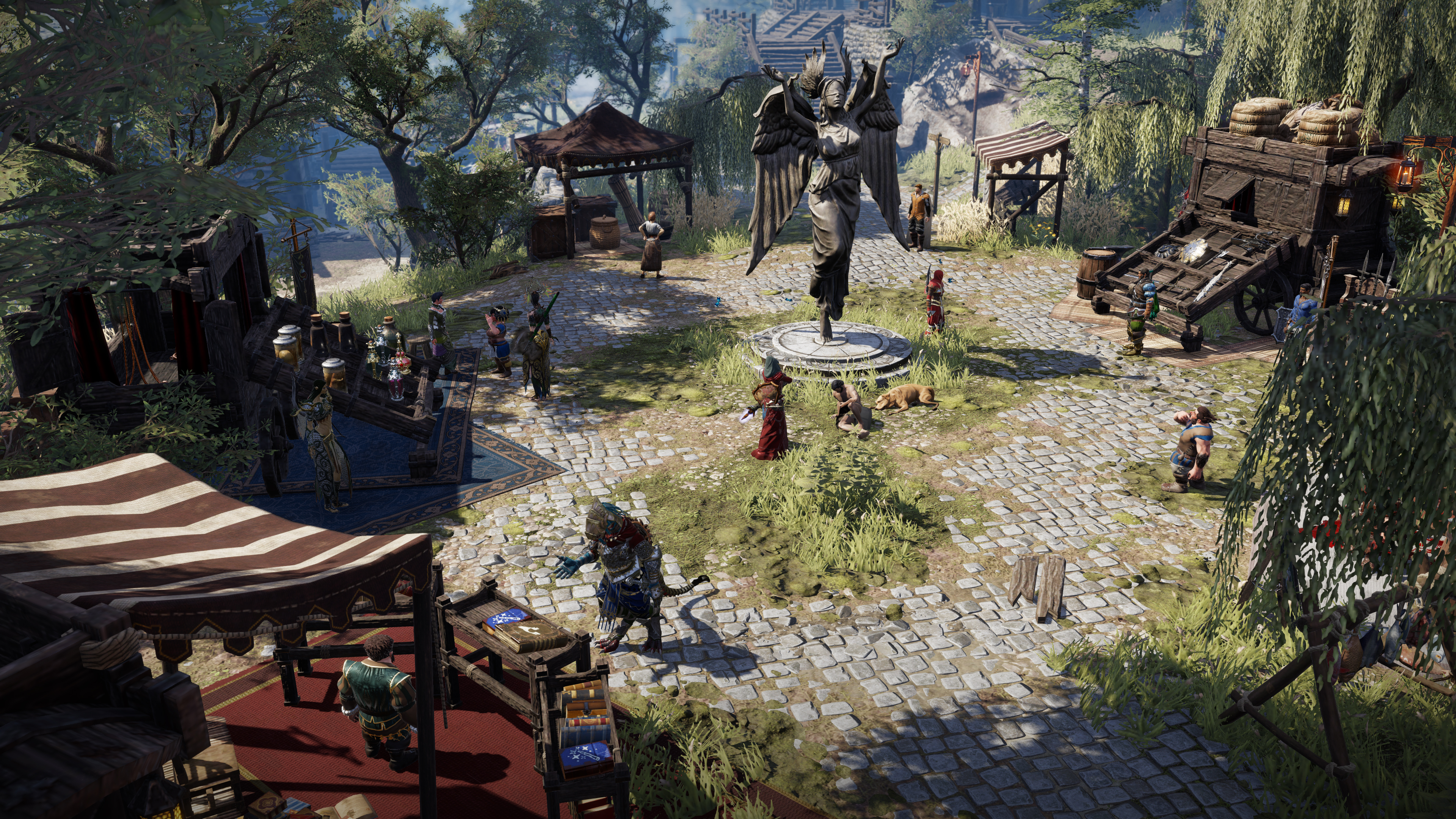
This is a feeling that sometimes persists outside of combat more than inside of it. I immediately am reminded of this video I watched a couple years ago from this channel called Cool Ghosts (same people that run Shut Up & Sit Down), where they basically said that sometimes the game resides in the menus more than anything else. Like for example in Disgaea 5 you end up spending so much time tuning your characters in the menus and customizing skills and armor that a sizeable chunk of time is spent inside menus rather than the combat which is supposedly the whole point of the game – at least on the surface. Because they basically argue that the developers wanted it to be like that by virtue of the fact that messing with those systems was so engaging. I’d probably say that the case is the same for Divinity: Original Sin 2. It’s a CRPG, and it has all the hallmarks of one. There’s lockpicking and trading and persuasion and all of these systems are in one way or another tied to your character in some way. And if you think about it a little harder than you should even these mechanics are systemic. Save for a few fuck-off doorways, every locked door can be opened, opened with a key, lockpicked, or beaten in by attacking it. And shopkeepers are people too. If you don’t want to spend a thousand gold on one goddamn skill book or a crafting material, you can just creep up behind them and pickpocket them, or if you are not a criminal you can invest in the ‘Barter’ civil ability which reduces the amount of gold items costs and raises the amount you can sell you own items for. Sometimes I wonder why RPGs are so complex. I mean, all these things are really fun but it feels like every other genre for the most part trends more towards like, simplicity. But I guess it’s because RPGs are unique in that they are all, every single one, from fucking Dragon Quest XI to goddamn Pillars of Eternity 2, some kind of offshoot of D&D – which, if you think about all little harder than you should is kind of a systemic game – if you’re being like, really weird about it. I mean, the whole point behind that fucking game is to simulate as much of the world as possible so, it doesn’t surprise me that you can mess with shopkeepers and set fifty thousand oil barrels on fire at the same time in this game.
But for me, a lot of Divinity did reside in the menus. I spent hours trying to figure out what I wanted to do with the Red Prince. Frame One I knew I was going to have him put points into the summoning skill – because I wanted him to summon monsters and shit. Lowkey this might be because I just finished reading Solo Leveling and the guy is so fucking cool he can summon like a trillion guys from the shadows and fuck everything up and I’m just like damn I want to do that but I can only do that in a video game so here we are. What’s interesting is that all skill books need your character to have a certain number of points put into that corresponding skill in order for them to learn it and use it. And usually the requirement is pretty low, it’s usually only like one or two points in the first half of the game – up to a total of ten. So, you can kind of get away with putting just the minimum number of points into a skill type just so you can gain access to the skill book, and then put the rest of your points into something else, like a weapon combat ability like dual wielding – which gives you a 5% damage boost and 5% dodging while dual wielding for every point put into it. Isn’t it cool how you have a built-in way to avoid attacks if you dual wield since you don’t have a shield but it’s not guaranteed damage mitigation like real armor is, it still ends up being a good chance to avoid an attack if you put enough points into it – up to 50% I think, what a fucking juicy decision to make. But each skill also gives you a benefit beyond just allowing you to learn and use spells you find in skill books. Like if you put three points into necromancy you can learn all the skill books that require three points in that skill, but you also heal for 30% of damage you deal, 10% for each point you put in. That’s kinda bigtime honestly – especially if that character does a lot of damage. Put ten points into that shit and you’re healing for literally all the damage you’re doing to enemy characters – and imagine if you’re hitting multiple characters at the same time… now we’re cooking with gas. If you want to be an actual insane person, you can even get the talent ‘Living Armor’ which restores 35% of all healing you receive to your magic armor. Dear god in heaven we are making a build now.
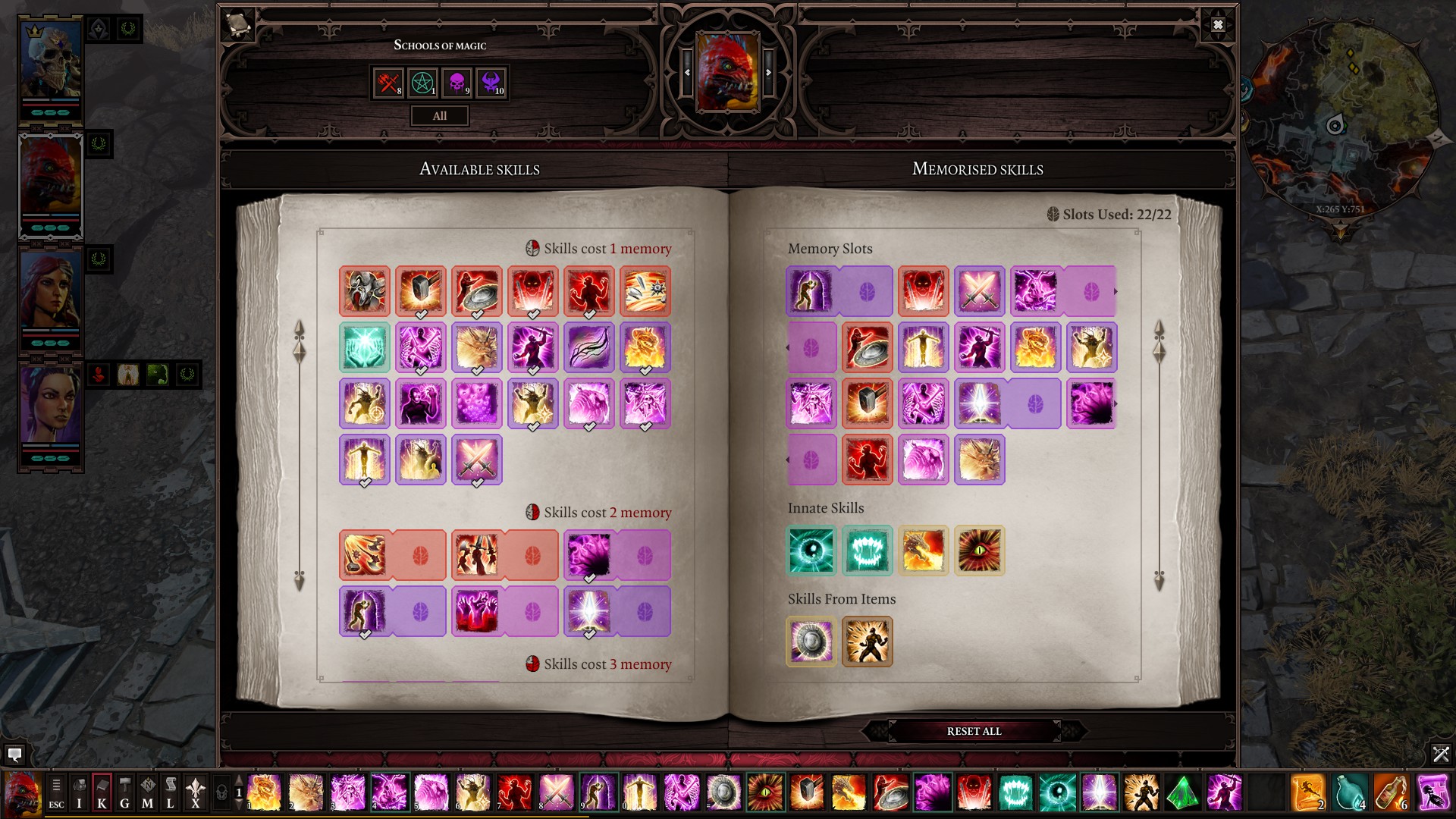
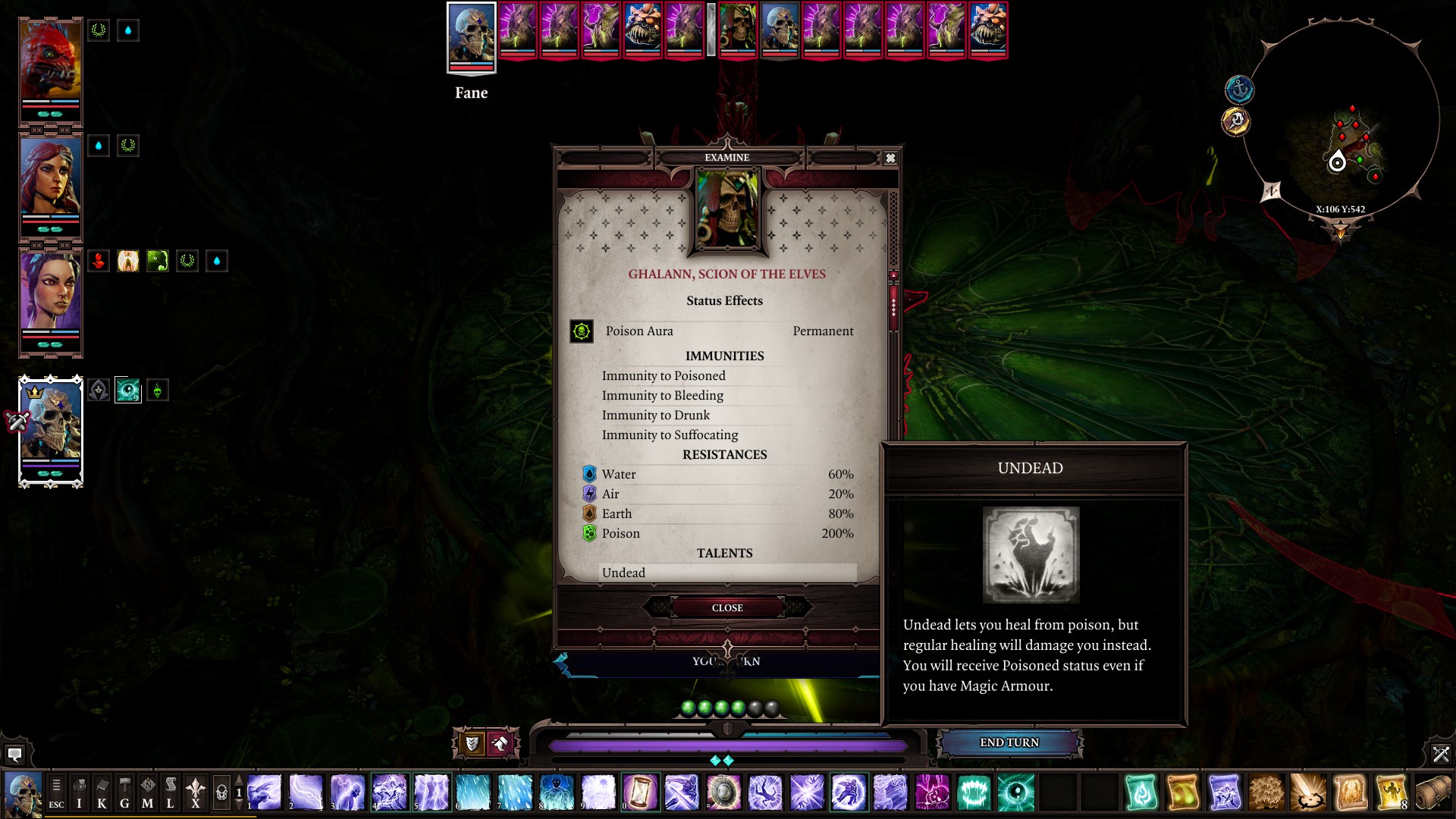
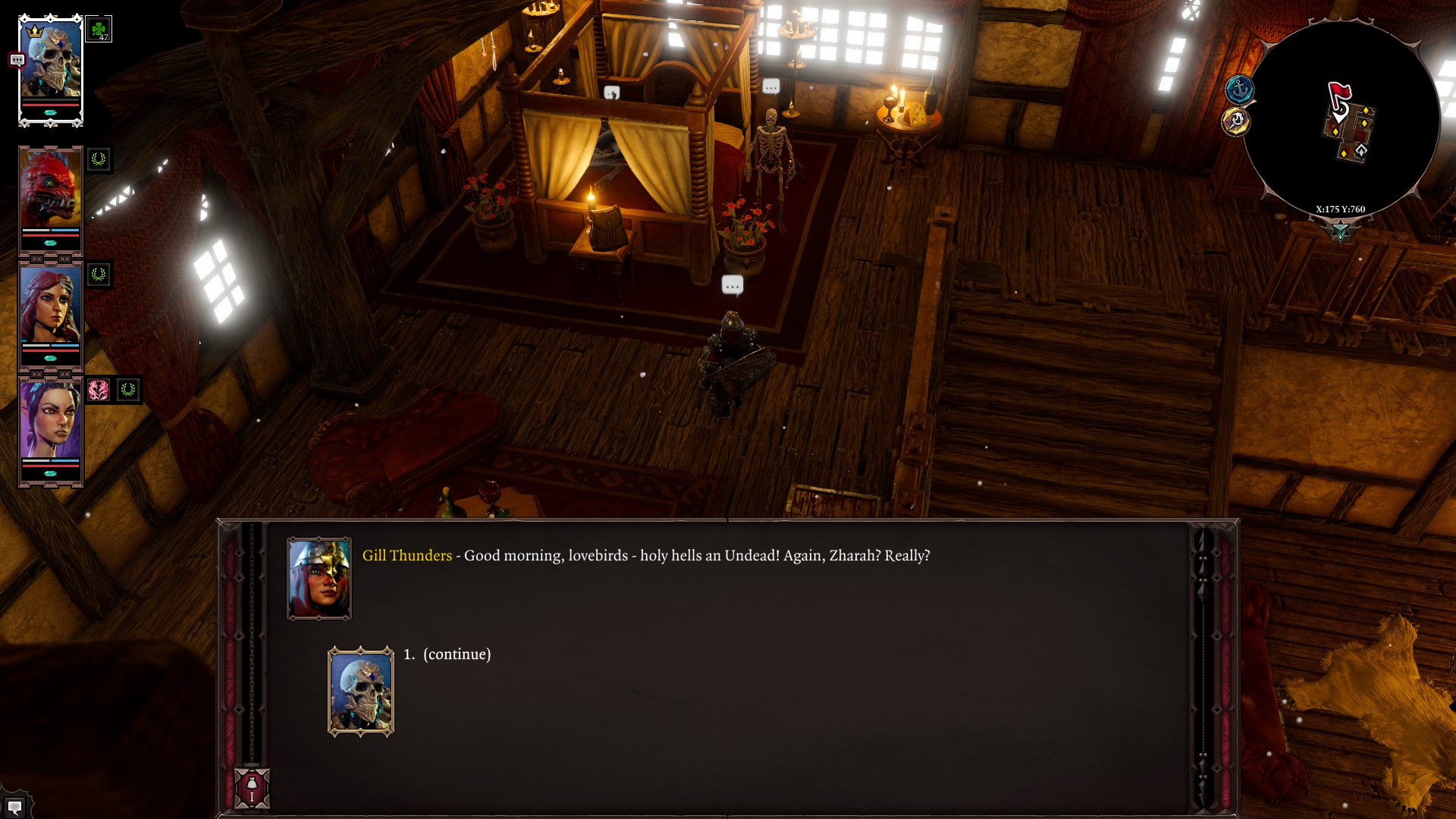
But there’s one thing I noticed this time I played Divinity that I didn’t fully understand when I played in 2018. I think because of the games that I’ve played I get locked into the idea that my character fills the role of a class or a job like in Final Fantasy or something – and that’s all they do. Hybrid classes are just a weaker version of whatever jobs they’re mixing together. So, I end up forcing myself to only get skills that correspond to the skill points I’m putting into my character: if I’m putting points into Pyrokinetic (boosts fire damage 5% for each point put into it and lets you learn higher level fire skills) I can only use fire skills, if I’m putting points into Warfare (boosts physical damage 5% for each point put into it and lets you learn higher level warfare skills) I can only use melee skills. But that’s really not how it is at all in this game, the game is literally built off of synergies: skills that work really well with other skills. Water or hydrosophist skills work really well with electricity, or aerotheurge skills. And you don’t even really have to have two separate party members to make this work. When you first boot the game up and you get to pick what “class” you want your MC to be, there’s a class called enchanter which gives you water and electric skills. You get a skill called rain, which is kind of funny because all it does is summon this stupid fucking rain cloud that just makes it rain on a surface. When you first start you might not understand what the point of this skill is. I mean it’s literally called fucking rain. But it’s sets the status ‘wet’ on all characters in the area, which makes them take a little bit more damage from water and electric skills – which is honestly pretty good. But ‘wet’ does something even more fucked up than that. Because the way most aero and hydro skills work is that it sets either something called ‘shocked’ or ‘chilled’. Both of them are debuffs that are pretty bad on their own, like I think one of them reduces your AP per turn and the other slows you and reduces your accuracy. That kind sucks. You know what sucks even more? Getting hit by one of those skills again. Then you’re just done. I do not get to play the game anymore. I get to watch fourteen computers beat the living shit out of me for ten minutes because if you get shocked and chilled set on you again while you already have that status effect applied, you’re now either stunned or frozen, meaning you lose out on your next turn. You know what sucks even more than that? Being WET! If you’re wet, you just miss out on being slowed and having your AP reduced and get straight to the computers steadily clapping your cheeks in quick succession. You do not want to be on the receiving end of this combination, but being on the sending end? Now you’re cooking with gas. That’s basically what I did with my main character, Fane (who is a skeleton that takes damage from healing potions btw).
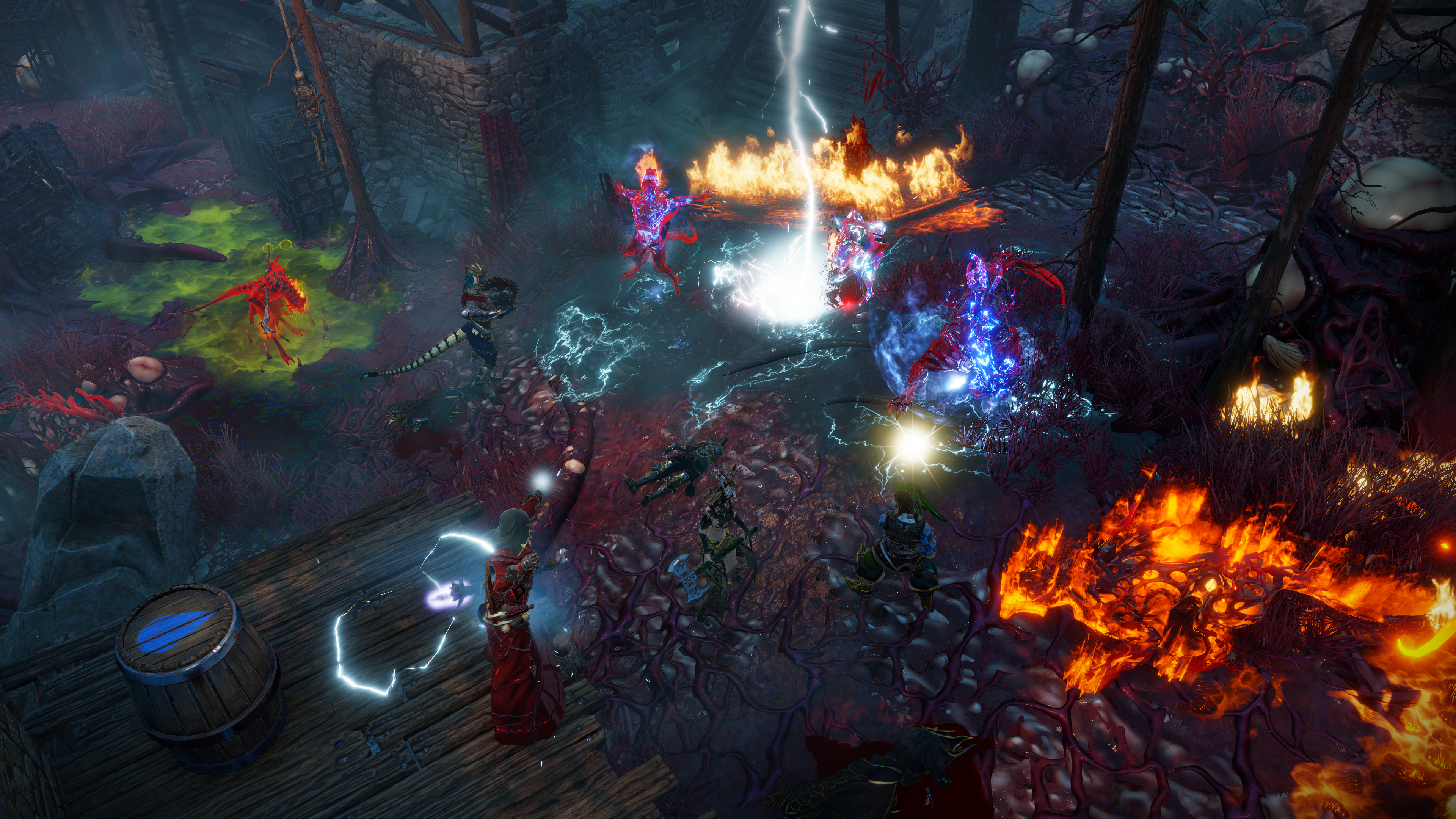
Synergies like that make it so fucking obvious that the developers really want you to stop thinking that classes are these things that are set in stone and you have to adhere to whatever skill books match with whatever skill your character has the most points in. When you start thinking about ways your builds can come together in really interesting and out of the way ways is when you really start cooking with gas. This is when I started to realize how unserious I was. I would literally spend three hours going back and forth from a trader, to my inventory, to my skill page, to my stat page trying to find the most insane combination of shit I could create to cheese the game as hard as I could. Elemental synergies are easy. Fire and oil, water and electricity; stuff like that’s pretty easy and intuitive and fun to understand because of the systemic nature of Divinity’s combat system. But if you really start to peel back another layer of mechanics, you’ll start to find even more really cool things. Things that are so cool that you start to wonder if the developers even found out about this stuff. But isn’t that kind of the whole point of games with synergies and systemic mechanics? Honestly, I’m pretty sure I either have dementia (someone told me that if you have dementia you start to remember your childhood more and more as you get older, I can’t wait for that to happen because I have no fucking idea what went on back then), or the developers that worked on Breath of the Wild said they were surprised when learned about some of the ways players figured out how to get through their puzzles – or maybe that was Slay the Spire.
Let me give you an example that I thought was really cool. Warfare skill books have a skill called ‘Enrage’ which (if I had to guess with a gun to my head) enrages a target character, guaranteeing all of their basic attacks and weapon skills deal critical hits during their next turn. I’ve only ever seen it used on the dude that was actually casting the spell, because if you have ‘Enrage’ you’re probably putting points into warfare already which means you already do a lot of damage with melee attacks anyway, and you wouldn’t cast it on anyone else unless there was another character that was nearly identical to the one casting the spell because a person using daggers is probably going for backstabs anyway – because daggers are the only weapons that can backstab – which also deals guaranteed critical damage (which is honestly, now that I think about it, also a really fun and interesting and unique quirk specific to that weapon type, isn’t this game so much fun?), or a person with a crossbow or a bow could use it, but enrage only has a range of 2m which is terrible, so you might as well just use it on yourself because if your aren’t fucking monkey man JR over here with his ranged units slap boxing with melee units, they’re not going to be anywhere near 2m of you, so just use it on yourself. But hold on a second. Hold your fucking horses buddy. Does a ‘target character’ include summons? I think I’m gonna be sick.
Think about it like this. Nearly every skill type in Divinity: Original Sin 2 needs you to put stat points into either Strength, Dexterity, or Intelligence for you to actually do real damage to enemies. If one of your characters has a lot of Geomancer points, sure they’re getting 5% per point in extra earth and poison damage – on top of 5% more armor restored with skills like Fortify and Mending, but earth and poison skills also scale with intelligence. So, it’s like you’re only getting half the damage if you put points into one but not the other. Same thing with warfare, you need points in warfare, but also strength, and that’s not counting putting points into one-handed or two-handed which also gives you more damage. I’m gonna be honest, that’s kind of a lot. But I guess it’s nice to know that if you want to do as much damage as possible it doesn’t take a lot of effort to figure out what to invest in, you probably won’t be able to max it out until the end of the game. Summoning is different though. Your totems don’t give a shit whether or not you’re strong or intelligent or whatever, you just need to put points into summoning and they’ll do all the work for you. That means you can get really creative with what else you want to do with a character that summons. One of the first things that I found out about was ‘Enrage’. If I just put two points in warfare– the bare minimum to be able to use the skill book, I could give my summons guaranteed critical damage basically for free. Now we’re playing video games. But I’m not done yet. If you play Divinity for a little bit you might start to notice that other schools of magic or whatever also have summons. Pyrokinetic has a skill where you summon a fire slug. Geomancer has a skill where you summon an oil blob (nice). Necromancy has a skill where you can summon a bloated corpse from (if I had to guess with a gun to my head… a corpse), and a bone widow. Let me tell you about this bone widow ladies and gentlemen. This thing does fucking damage. This thing does more damage than all my party members. And that’s before you make it eat a corpse that gives it a 35% damage buff. It is fucking crazy. It is fucking stupid. It is fucking ridiculous. The best part is, is that these summons don’t scale with pyrokinetic or geomancer or necromancy, the scale with summoning! What the actual fuck! You can get away with putting their bare minimum number of points in one or two of these schools and have access to all these summons. This can’t be balanced. You know what’s even more unbalanced? There’s a summoning skill called ‘Supercharger’ that gives you summon or totem fucking double damage, the only downside being that they die their next turn. That kinda sucks. But if you have another summoning skill called ‘Door To Eternity’ you can keep all of your summons and totems alive for three turns, even if they lose all of their HP. That’s kinda bigtime. Enrage + Supercharger on it’s own is around 500% damage, your enemies are living in Spain without the S. (which might just be completely wrong, because honestly that number is so high that it sounds wrong but I’m pretty sure it’s not.) So because summons deal so much damage on their own and don’t require an investment in any damage stats, I just decided it would be better to put more points into constitution and memory – which is a stat that gives you one skill slot for every point you put into it. Which is honestly a really useful stat for any kind of build.
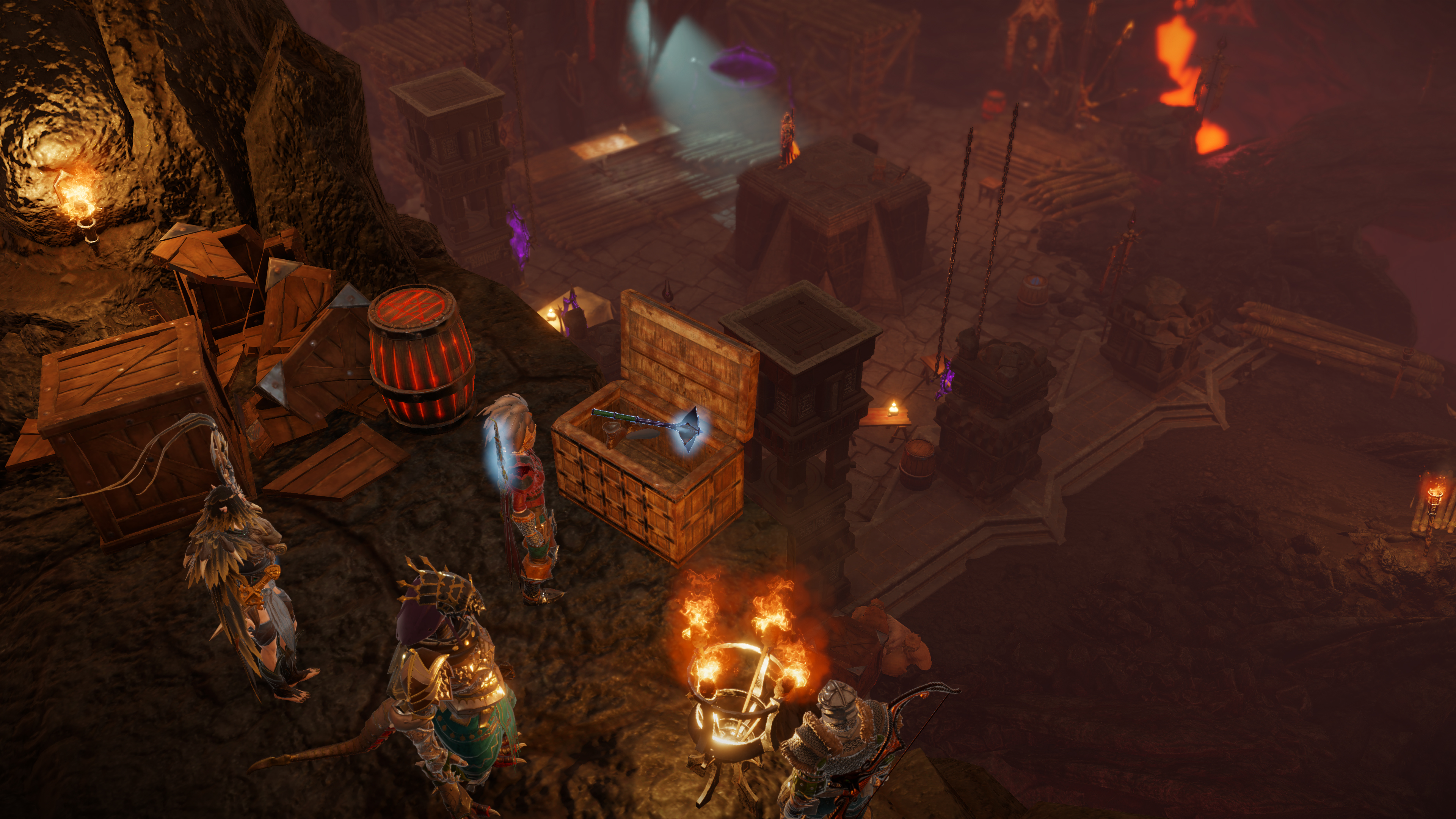
I didn’t realize this at first but honestly might be better, especially early on, to focus more on having as many spells as possible rather that rushing to invest so much on your damage stats; if you only have three spells it doesn’t matter if you have a million damage because after one turn all you’ll be doing is throwing auto attacks for the next ten minutes. When I played Divinity in 2018 and the first time I played in two weeks ago I completely ignored buying anything from traders all together. In my head, which is definitely some weird habit I picked up after whatever games I’ve played over the years – that’s right, I’m a Behavioral Psychologist now, I believed that buying anything with currency meant that you didn’t explore enough and it was more of a concession to the player as a way for them to catch up. And honestly in some ways it is? There are a lot of skills you can find just buy winning battles and exploring the world, but at the same time talking to traders is exploring the world. Every goddamn NPC in this game is some kind of trader. You can trade with a fucking child, they’ll never have anything useful, usually it’s like a string and a toy box or something, but you can still trade gold or items for that stuff. A lot of the time you’ll run into the type of character that looks like they definitely get down like that and what do you know they have five warfare skill books and some crafting materials that they want to trade. Trading is 70% interacting with NPCs that don’t display themselves as shopkeepers but are instead just regular characters exploring the world or being a doctor or something. There was a character I ran into that was healing some dudes that got fucked up and when I opened her trading menu there were a bunch of hydrosophist books: a skill group that mainly focuses on healing. Sick. That’s some good ass world building right there. That’s tactile shit that you can feel. I recently watched some of an interview with the editor of the Dune movie and he was talking about how some aspects of worldbuilding in there that were more tactile and small that are really important and in a really weird and kind of reachy way I feel like this is the same thing.
Every once in a while, I would uncover some other subtle layer of depth in this game just like that that seems so small and obvious but would always blow my mind. Like, obviously I should be trading with NPCs. But I felt like I was playing the game so much better than before and I felt so much stronger that it was like, a real learning experience. And I really like that a lot with games. I would rather start of not having fun and risk never having fun than have the game teach me exactly the way I’m supposed to be playing it. Because then it doesn’t really feel like my experience anymore; it just feels like I’m rehearsing a play that the developers made. One thing that I ignored a lot that also seems like, really obvious and stupid in retrospect are skills that use source. Source skills, on top of using Action Points just like every other skill in the game, use Source Points. But unlike action points, you don’t get them back after every encounter; you have to get them from somewhere in the world. Usually, it’s from using a skill called Source Vampirism to violently rip it out from corpses, it’s sick because it turns the corpse into a funny little meat pile. Nice. What’s really fucked up is that usually when a person dies within the context of the world of this game, they pass on to this place called the Hall of Echoes which is basically heaven, but if you suck the source out of a dead body with source vampirism, you’re condemning them to oblivion forever. It’s really fucked up because there’s another skill called Spirit Vision which lets you see spirits of the dead. And you can actually talk to them about their previous life but it’s really clear that many of them don’t realize they’re dead and actually believe they’re still alive living their lives and when you try to suck the source out of them it’s clear that they really don’t want to go yet and it’s kinda sad and they cower in fear as their soul is launched into the void forever and there’s no existence or consciousness in that kind of death, and it’s really fucked up when you think about it. I don’t know what you believe about the nature of our reality but within the context of Divinity’s world it’s sad that there’s this option of some kind of existence within the Hall of Echoes and you’re taking that from them forever. I felt kinda weird about that. I don’t want to destroy someone’s soul forever. But I also want to win, so I’m gonna just go ahead and kill people because source skills are kinda bigtime.
There’s a lot of good ones with a lot of really useful and fun utility like the Polymorph skill ‘???’ that swaps your current vitality % with a target characters current vitality %. Like what? You could be on the brink of death and swap health with a boss with an insane amount of flat HP and just cut through all of it in an instant. Granted it’s pretty hard to set up and like most skills in Divinity it’s resisted by armor. There’s a skill from a different group that works insanely well with it but I’m not going to say what it is because I feel like I’m kinda spoiling all the fun. My personal favorite is this Aerotheurge skill called ‘Closed Circuit’ which blows up everyone in a 4m radius around you with an insane amount of air damage, makes a cursed electric cloud around you, and gives you total immunity to air damage for one turn. It is fucking crazy how easily you can ruin people with this skill. It usually cuts through the magic armor of most ‘normal’ enemies that are your level and bosses that trend toward having more physical armor than magic armor (typical of melee characters (rock, paper, scissors, my guy)). (I mean, there aren’t really any bosses in this game, I mean, I guess there are obviously bosses within the context of the story, and they have encounters around them and they might have better stats than normal but they behave just like every other player and non-player character in the game; they all have stats and skills and a limited number of action points – another juicy example of the systemic design of this game, if it’s a character it can get fucked up just like you can (I fucking hate it when status effects don’t work on bosses in RPGs, like that’s the one fucking guy I actually want to use status effects on)). Anyway, it fucks up magic armor and it usually will end up stunning enemies with lower magic armor because they get the ‘shocked’ status effect set on them, then they instantly get it set on them again because of the static cloud. It is extremely useful and fun to use. Even better is when you’re in the middle of like five enemy characters that all want to cut your nuts off and you just hit one button and just turn an entire portion of the arena into Spain without the S.

I don’t know why I ignored these skills when I played in 2018. Okay, I kinda sort of do. I guess because Source points are heavily tied to the story of the game – I mean half the abilities that are under the ‘Sourcery’ skill list are for the story – I guess because of that my brain kind of wrote them off as some kinda ‘extra’ thing. Like how in some JRPGs some god or whatever will give you some super mega ultra-power up that just fucks everything up but you can only use it for that one encounter for the story. You know what I’m talking about. But that’s not what these skills are at all. They’re very important if you want to win, they’re not overpowered at all, and most importantly, they’re so much fun to use. I think it was also because it was a pain in the ass to get the source points back once I used them. I feel like it’s like that for a lot of games with consumable items. Players will typical save all of their health potions until the final fight of the game and then end up not using them at all. That was pretty much the deal with me for the entire game. Oh, no I can’t use them during this encounter I have to save them for later. Or, oh no it’s going to be so annoying to get the points back after I use them. I mean now I know it’s really not annoying at all. You don’t have to save your source skills at all – you can use them during every encounter in the game. You know why? Because you have a fresh resource every time you win a battle! Like, it’s so obvious in hindsight and I missed out on so much because I was being lazy the first time, I played the game. Like, all it takes is a little bit of admin and effort after a fight and you have access to this incredibly powerful tool. But again, when I peeled back another subtle layer of Divinity that seemed so obvious in retrospect it lit my brain on fire. Do you know how good it feels to use Source Vampirism on a corpse with only 1 AP left (it costs 1 AP to use) after you just used a bigtime ability like Closed Circuit right in front of an enemy so you can use another source skill on your next turn? It feels really good. It makes me feel really smart. I’m a smart guy alright?
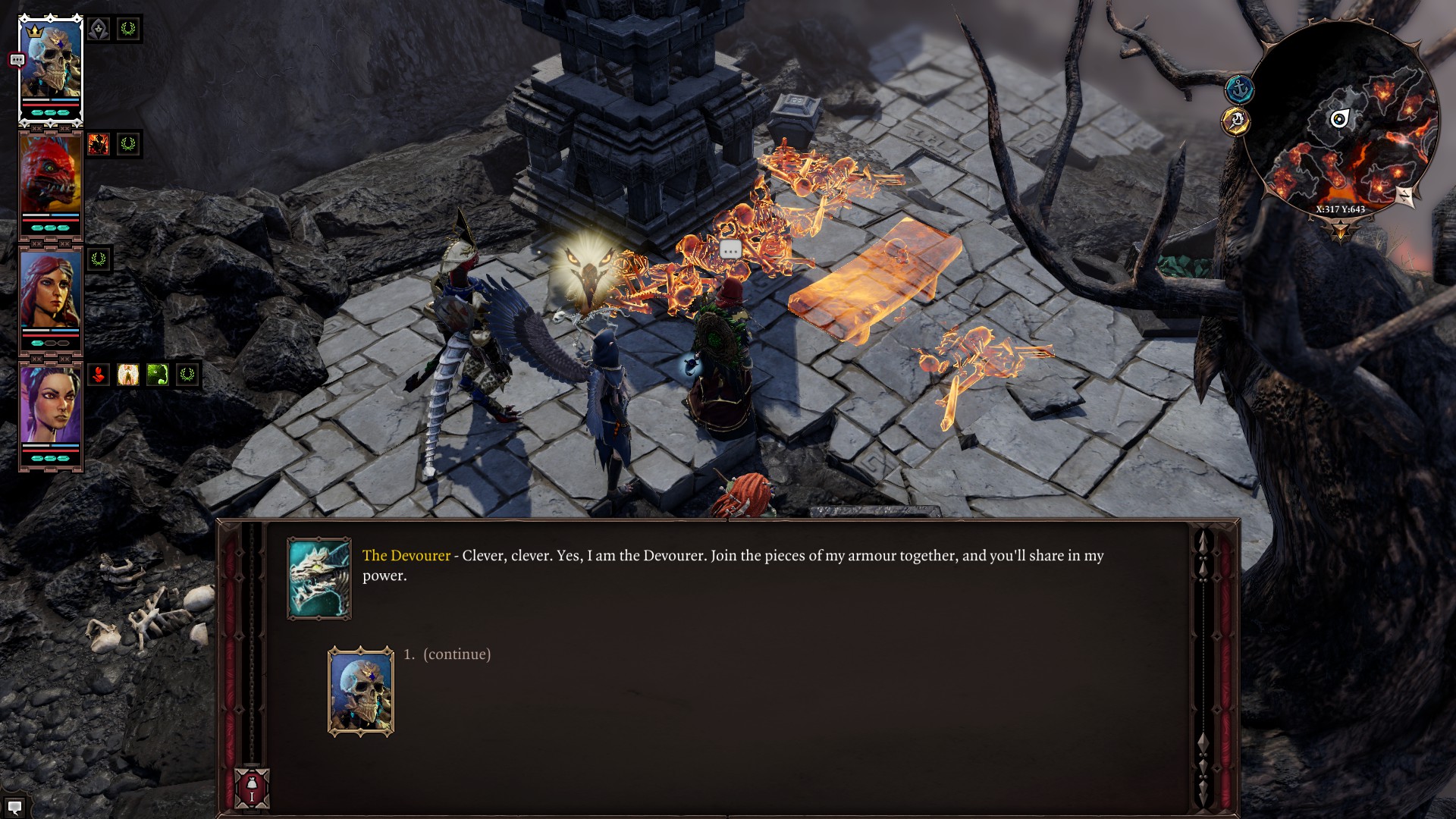
The four relics of Rivellon also sets my brain on fire in a similar way because I think getting cool and unique armor sets is fucking sick, but you actually have to uncover some secrets in the world to find them. Like, I’m genuinely unironically trying to find the next piece of the devourer set because it sounds fucking badass and I’m using a book that I found in the previous act to find its location which apparently is some secret crypt from an ancient death cult or something that even the big ancient long dead bad guy of the story that everyone always talks about. (there’s always a big ancient long dead bad guy that everyone always talks about in fantasy: King Aerys, Melkor, fucking Madara). Even he was trying to research this cult hundreds of years ago but he could never find it! What the fuck! That’s sick! And apparently the Priestess who orchestrated this whole fucking thing thousands of fucking years ago didn’t even make it, she just found the design buried somewhere and made some other guy make it! What the fuck! Who made this armor?! I need to know NOW. Even the Dwarf goddess thing with the vulture armor set was cool because it felt like I uncovered this secret thing and this god is extremely powerful and can kill you instantly but if you say the right thing which is some sickass religious chant about honoring the dead or something you get this fucking sickass armor set! That’s dope! But I wonder what happens if you can kill her? Again, because of the systemic nature of CRPGs I’m pretty sure you can kill almost every NPC in the game, granted it’s extremely difficult: if you try to kill a guy in a bar during the second act the entirety of Driftwood tries to rip your nuts off, and this Goddess has like thousands of HP and adds that are all way stronger than you but I’m sure it can be done (not me though y’all stay safe).
Like all things in life, try to enjoy the moment more than anything else.
Thanks for reading.
-zak

 Slickaria!